
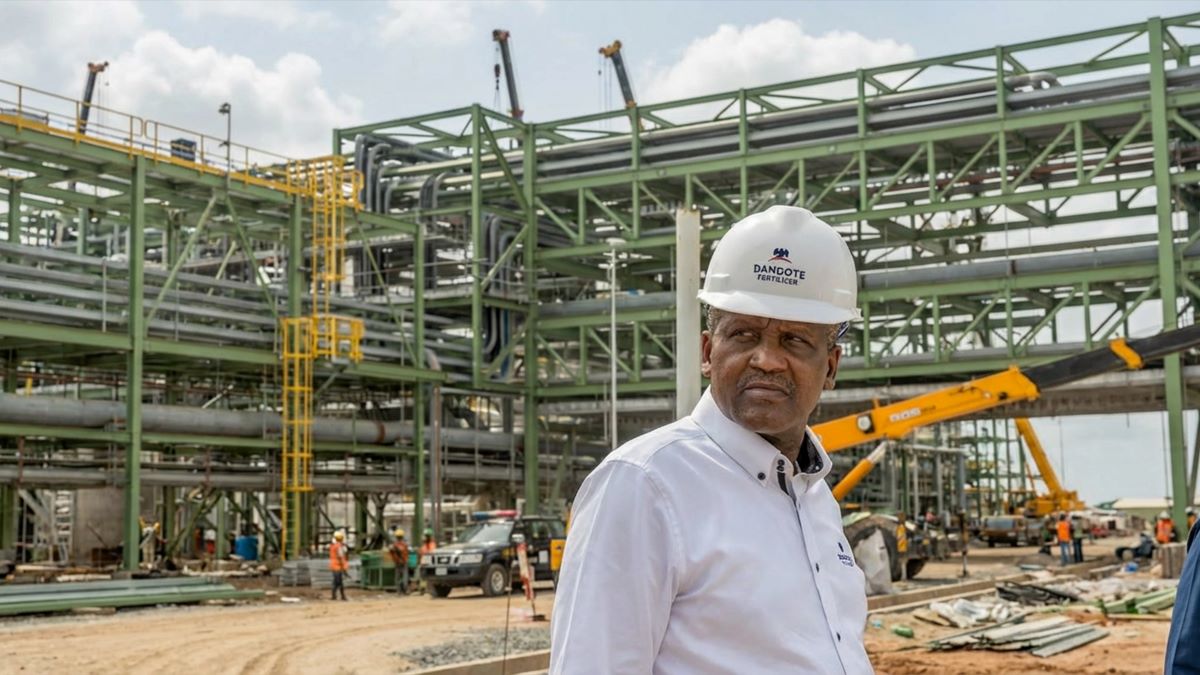
The Dangote Refinery in Nigeria has done what decades of African energy policy failed to deliver. For decades, a continent sitting on some of the world’s largest crude oil reserves has been refining the product abroad. It’s priced in someone else’s currency, arriving on someone else’s schedule. That arrangement is finally cracking.
Takeaways
- Dangote Refinery shipped 456,000 tonnes of fuel to five African countries after hitting full capacity of 650,000 barrels per day in March 2026.
- 75% of East and Southern Africa’s refined fuel comes from the Middle East. The Iran-Israel war forced them to turn to a local refinery.
- For decades, African nations have been importing fuel it produces the raw material for, from the Middle East.
- South Africa is already in talks for a 12-month supply contract and the queue is growing.
In March 2026, the Dangote Refinery hit full production capacity at 650,000 barrels per day, and last month, it shipped 456,000 tonnes of refined fuel to five African countries. It shipped 12 cargoes to Côte d’Ivoire, Cameroon, Tanzania, Ghana, and Togo, sold to international traders on a Free on Board basis.
What pushed this into high gear
Several African governments began moving to diversify away from Middle East fuel supply after Iran partially closed the Strait of Hormuz on February 28, choking off the waterway through which roughly a fifth of the world’s oil flows. The shock was immediate. Petrol prices in Nigeria, which hovered around ₦870 per litre before the latest escalation, jumped to around ₦1,500 per litre in many parts of the country.
For the rest of the continent, the crisis exposed a vulnerability that was always there. According to CITAC, a leading specialist on African oil markets, about 75% of refined fuel imported by countries in East and Southern Africa is sourced from the Middle East. When that corridor tightened, African governments had to turn to Dangote Refinery.
South Africa, Ghana, and Kenya have formally reached out to the refinery seeking alternative fuel supply arrangements, while several other countries are making enquiries. A refinery spokesman confirmed demand is coming from outside Africa too, particularly for jet fuel.
DON’T MISS THIS: Malik Afegbua is doing what governments refused to do, saving Africa’s memory
What makes this refinery different
In February, the Dangote Petroleum Refinery became the first refinery globally to achieve full nameplate capacity in a single train at 650,000 barrels per day, a scale that dwarfs anything else on the continent. Initial investment exceeded $19 billion, and expansion plans announced in October 2025 target 1.4 million barrels per day, which would make it the largest refinery in the world.
But capacity alone is not the story. The refinery describes its exports as Euro 5-grade gasoline and diesel, a quality standard that positions Nigeria to supply markets that have historically received lower-grade fuel imports from distant sources. West Africa has long been treated as a destination for substandard fuel products. That designation is now being challenged from within the continent.
Traditional African fuel imports require 14 to 21 days transit from European refineries, or 12 to 18 days from Middle Eastern suppliers via Red Sea routes. Continental supply from Lagos cuts delivery to coastal West African destinations down to three to seven days. Shorter routes mean lower logistics costs, fewer supply disruptions, and less pressure on foreign exchange reserves.
The bigger picture
The total demand for all oil products in Sub-Saharan Africa reached approximately 114 million metric tonnes in 2024, according to CITAC, and most of that was met by imports. World Bank data shows the leading sources of Africa’s fuel imports include the UAE, India, Belgium, and Saudi Arabia. The continent has been paying logistics premiums, currency premiums, and geopolitical risk premiums on fuel it produces the raw material for.
Dangote has positioned the refinery as the cornerstone of a broader strategy to grow Dangote Group’s revenues toward $30 billion by 2026 through integrated exports of refined fuels, fertilisers, and petrochemicals. The export push is commercial strategy meeting geopolitical moment, and right now, both are pointing in the same direction.
The 456,000 tonnes shipped in March represents less than a fifth of the plant’s monthly output. The refinery says domestic Nigerian supply will not be affected, about 75% of output is reserved for Nigeria, with the remainder available for export.
Follow BLKNOW for the stories behind the headlines: Instagram/X