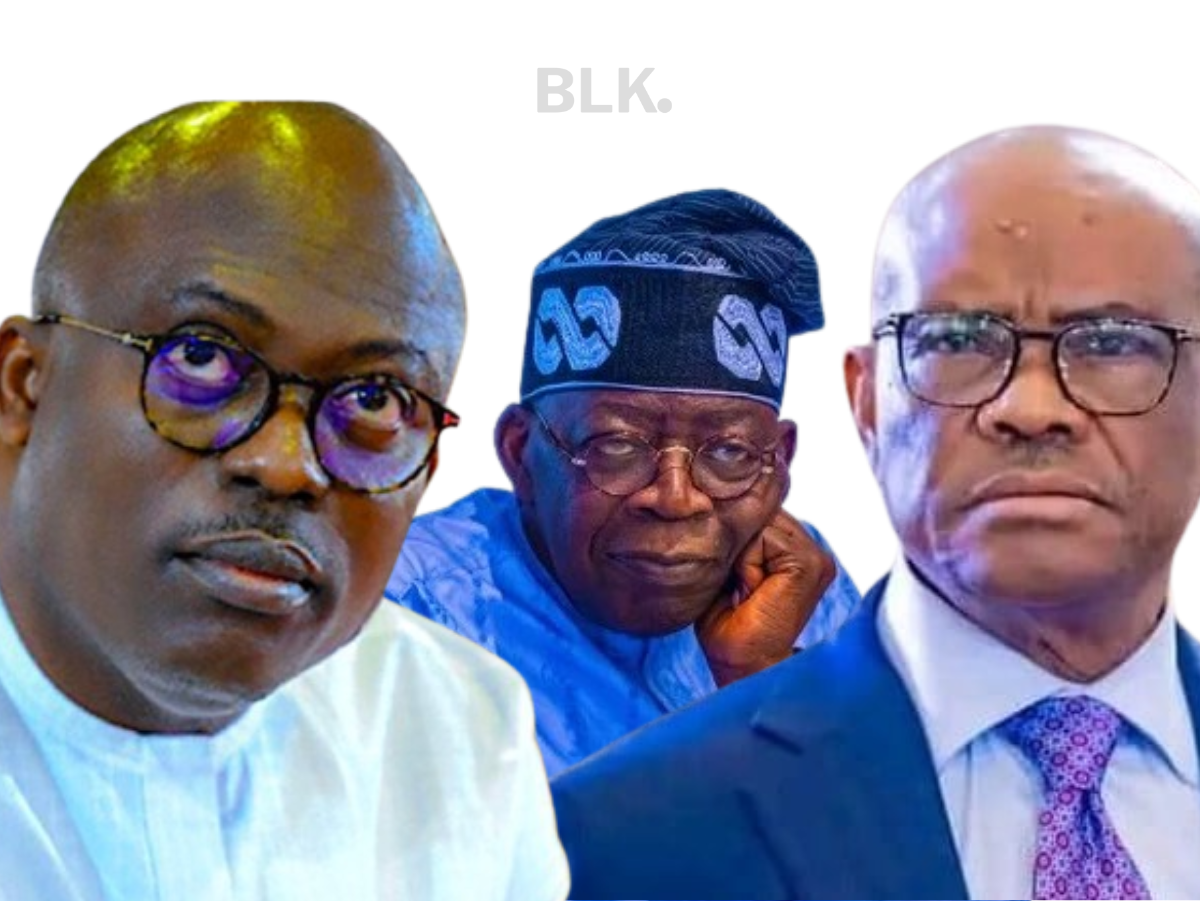
There’s a line I can’t get out of my head as Rivers State drifts, again, towards the edge: “agreement is agreement.” In normal climes, that’s just basic decency. In Nigerian politics, it can become something darker – a coded warning that power is being enforced like a private contract, not exercised like a public trust.
That is why the latest impeachment push against Governor Siminalayi Fubara feels less like governance and more like a test of dominance. And it places President Bola Tinubu in a tight corner he helped create, between a governor who has now joined the ruling APC, and a minister in his cabinet who still behaves like the political landlord of Rivers.
The backstory
Let me rewind for those who haven’t been following the Rivers soap opera closely.
Rivers is the aftershock of a political marriage that collapsed in public. The feud between Fubara and his predecessor, Nyesom Wike, now the Minister of the Federal Capital Territory, spread quickly into the House of Assembly, paralysed the basics of government, and became so combustible that Tinubu declared a state of emergency on the state in March 2025, suspending the governor, his deputy and the state assembly. He swore in Vice Admiral Ibok-Ete Ekwe Ibas as the sole administrator who governed the state for six months.
On September 17, 2025, Tinubu ended that emergency rule and reinstated the elected officials, saying the “constitutional crisis” had been resolved and that Rivers should return to democratic order from September 18.
You would think that would be the end of it. It wasn’t.
Fast-forward to late 2025, Fubara formally crossed over from the PDP to the APC. In doing so, he did not hide his calculation. He openly linked the move to political stability, alignment with the centre, and, importantly, gratitude to Tinubu for “keeping the Rivers State government standing through its most challenging moments.”
Then came the new storm
On January 8, 2026, the Rivers State House of Assembly, dominated by lawmakers widely viewed as loyal to Wike, commenced impeachment proceedings against Fubara and his deputy. According to reports of the plenary, 26 lawmakers signed a notice of alleged gross misconduct, listing accusations ranging from spending issues to allegations tied to the legislature and compliance with court rulings.
Now, here is where the story stops being “politics as usual” and starts looking like something more personal.
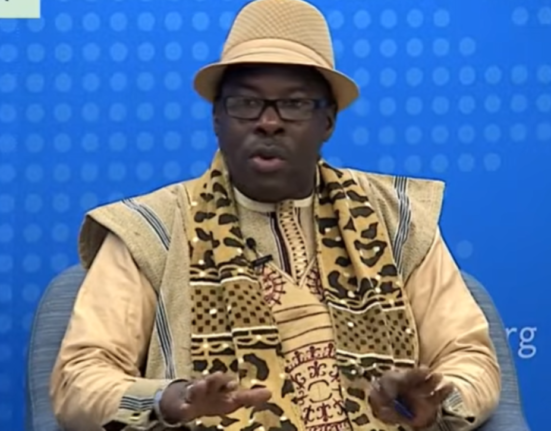
In an interview on Arise TV, Fubara’s Special Adviser on Political Affairs, Darlington Orji, dismissed the impeachment drive as meritless and insisted, at least as of the time he spoke, that the governor had not even been served any formal proceedings.
But Orji didn’t stop at procedure. He went straight to motive.
He alleged that the real quarrel is money dressed up as constitutional outrage. He spoke about pressure for a supplementary budget late in the fiscal year, and claimed the governor rejected it because he did not need extra funds, mentioning that the administration had substantial funds in the state’s coffers. Orji went further, suggesting lawmakers had already benefited from constituency allocations and vehicles, framing the supplementary budget fight as a scramble for more.
If Orji’s framing is even half-true, then what we are watching is not an Assembly defending democracy. It is a faction trying to enforce obedience.
Of course, the lawmakers tell their own story. In a press briefing, members of the Assembly insisted they would not “retrace” their steps, accused the executive of intimidation and constitutional infractions, and said they were proceeding to protect legislative oversight and the rule of law.
So we now have two competing narratives: a governor’s camp saying “there is no legitimate basis here,” and lawmakers saying “we are enforcing accountability.”
But it is impossible to ignore the third character in the room – Wike.
In recent weeks, Wike has publicly accused Fubara of breaching a peace agreement brokered by Tinubu in June 2025, and he has repeatedly hinted that he will disclose what was agreed “before Mr President.”
There are also the rawer political lines Wike has used, suggesting Fubara’s second term would “bury” him politically, and warning his camp would not “repeat” the 2023 “mistake.”
DON’T MISS THIS: What you should know about 7.5% VAT on bank transfers from January 19
Tinubu must step up
Rivers cannot be governed as the enforcement arm of one man’s political grievance. This is where I stand, and anyone with a sense of reason shouldn’t have a problem with that. Most importantly, President Tinubu cannot be a neutral bystander now.
Tinubu’s problem is not that he lacks options; it is that every option has a political cost.
On one hand, he has publicly praised Wike as a cabinet “shining star” and “top performer,” even while acknowledging he (Wike) belongs to another party. That praise is not just ceremonial, it signals protection. It tells the country that Wike is not a minister Tinubu wants to weaken.
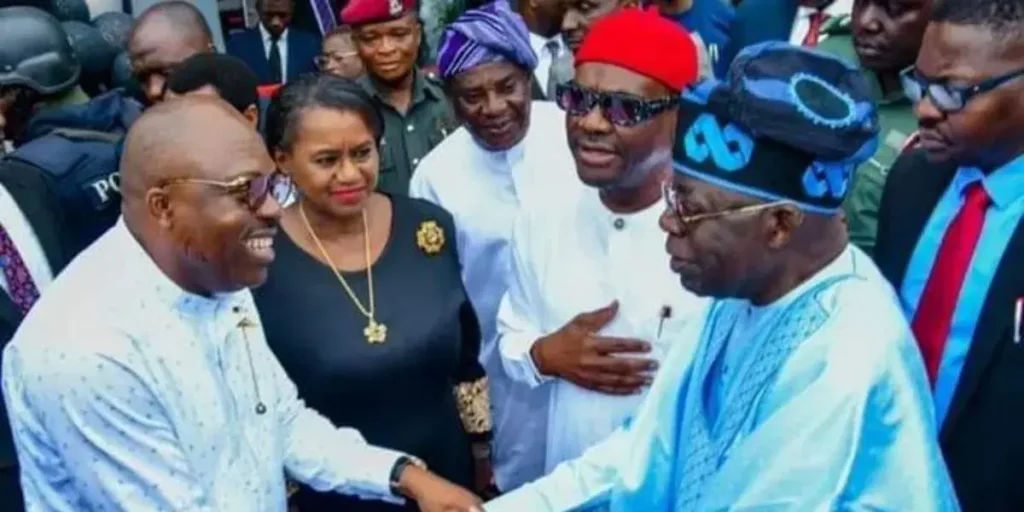
On the other hand, Fubara is now a member of the APC, and has positioned himself as part of Tinubu’s “one political family” in Rivers, explicitly tying that move to the President’s intervention during the emergency-rule period.
So let me ask the question many Nigerians are asking in private: When two men claim proximity to the President as political insurance, who does Tinubu “owe” more; his minister or his new party governor?
My answer is Tinubu owes Rivers State the Constitution, not personal loyalties.
If the impeachment allegations are legitimate, then let the process follow the Constitution transparently, with verifiable evidence, due process, and the sober seriousness impeachment demands, not the theatrics of political punishment.
But if this is, as Orji alleges, a campaign to prove that Fubara must “dance to a tune” or be removed, then Tinubu has a duty, moral and democratic, to stop Rivers from sliding back into engineered paralysis.
“Agreement is agreement”
And there is another layer I cannot ignore – the “agreement” narrative.
Once politics becomes a series of secret agreements, whose terms are unknown, whose enforcement is public suffering, and whose consequences are institutional breakdown, citizens become spectators in their own democracy. That is why the recurring question of “what exactly was agreed” has become so powerful. It reflects a public suspicion that state power is being traded like private property.
So here is what I think Tinubu must do, if he wants to look like a President and not an interested party managing a feud.
First, he should draw a bright line between political settlement and constitutional authority. Peace deals can calm tempers, but they cannot replace lawful governance.
Second, he should insist on institutional discipline: lawmakers must show evidence; the executive must respect legitimate oversight. Rivers is too strategic, politically and economically, for permanent trench warfare.
Third, Tinubu must be willing to tell Wike what every powerful political godfather eventually needs to hear: You can have influence, but you cannot have ownership.
If Tinubu chooses to protect Wike’s political dominance at the expense of stability in Rivers, he will embolden the very culture Nigerians claim to hate – the culture where one man’s ego can hold an entire state hostage.
And if he chooses to protect Fubara only because the governor is now APC, he will confirm the cynicism that party colour, not constitutional order, is what the Presidency honours.
I am not asking Tinubu to pick a friend. I am saying he must pick a principle.