
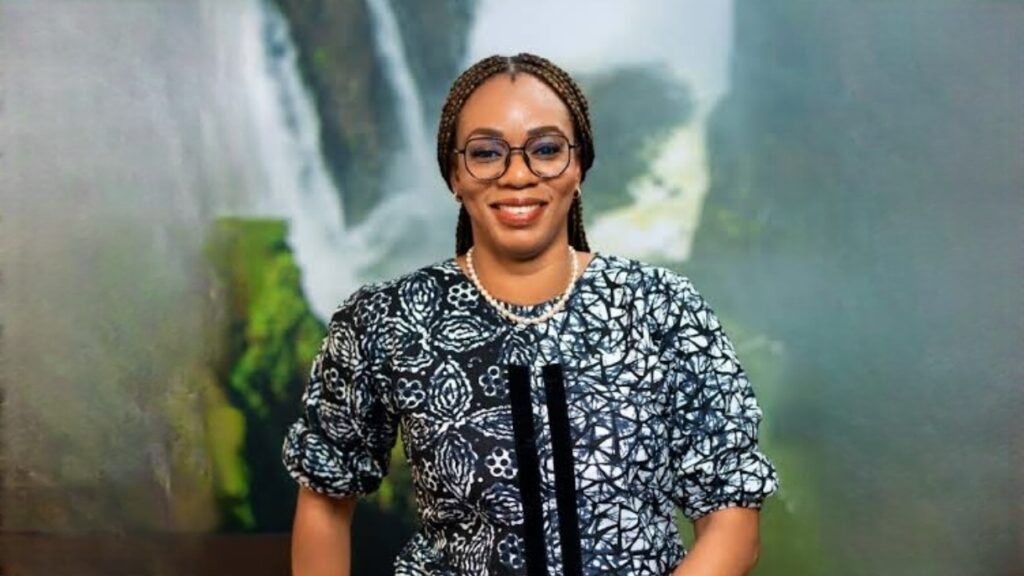
She took over MultiChoice Nigeria after subscriber losses, price disputes and a Canal+ takeover. Her job is to defend a pay-TV business in a market where viewers have more ways to leave.
When Kemi Omotosho became chief executive of MultiChoice Nigeria in January, the business she inherited was already losing customers.
MultiChoice said its Nigerian active subscriber base fell 13% in the year to March 2025. Nigeria accounted for more than half of the subscriber losses across the group’s Rest of Africa business that year.
The company had raised prices by 25% in May 2024 and another 19.5% in March 2025. Those increases still failed to keep pace with the naira’s depreciation. MultiChoice said the average naira exchange rate weakened 51% against the dollar during the financial year, cutting its Nigerian dollar revenue by 43%.
Omotosho also took over four months after Canal+ gained effective control of MultiChoice Group.
The combination gives her a job that is larger than selling television packages. She has to keep Nigerian customers paying for DStv and GOtv while a new owner restructures the wider company and viewing habits continue to move beyond satellite television.
DON’T MISS THIS: Top 10 most-viewed Nollywood movies on YouTube in 2025
Her career was built around keeping customers
Omotosho has always been an insider at MultiChoice Nigeria.
She has spent more than a decade inside the group, including roles that dealt directly with customer retention.
She became Head of Retention at MultiChoice Nigeria in 2014, then Executive Head of Customer Value Management. She later became Group Executive Head of Customer Value Management for the Rest of Africa, with responsibility spanning more than 50 markets.
Before returning to Nigeria as CEO, she was Regional Director for Southern Africa, where she carried full profit-and-loss responsibility across seven countries.
That background is unusually close to the problem now sitting on her desk.
For years, MultiChoice could rely on DStv as one of the strongest paid entertainment products in Nigerian homes. The competitive set is broader now. Netflix, YouTube, TikTok, free streaming platforms, piracy and cheaper digital entertainment all compete for the same household spending.
MultiChoice’s own 2025 results acknowledged the pressure from streaming services, social media and piracy. Across the group, linear pay-TV subscribers fell 8% to 14.5 million in the year to March 2025.
Nigeria was one of the hardest-hit markets.
Price increases solved one problem and created another
MultiChoice’s Nigerian business has an uncomfortable currency problem.
It collects subscription fees in naira but pays for parts of its business in foreign currency. Sports rights, technology and some international content carry dollar or other hard-currency costs.
At the end of the 2025 financial year, Nigeria had no foreign-exchange hedging cover in MultiChoice’s Rest of Africa portfolio, according to the group’s results presentation.
When the naira falls, holding subscription prices steady becomes harder. Raising them creates a different problem.
In February 2025, the Federal Competition and Consumer Protection Commission (FCCPC) ordered MultiChoice to maintain existing DStv and GOtv prices while it examined a proposed increase. MultiChoice proceeded with the increase on March 1.
The FCCPC then filed charges against MultiChoice Nigeria and then-chief executive John Ugbe, accusing the company of ignoring its directive and obstructing its inquiry.
MultiChoice challenged the commission’s intervention in court. A Federal High Court later struck out one of the company’s suits as an abuse of court process, while noting that the FCCPC had investigative powers but could not simply fix prices without the required legal authority.
Omotosho inherited that history.
She has since said that pricing decisions for Nigeria remain local even after the Canal+ takeover.
In August, she said pricing, channel packaging, content strategy and distribution are determined by the Nigerian leadership team rather than dictated from France.
That places the affordability problem squarely with the local business.
Canal+ now owns the company she runs
Canal+ took effective control of MultiChoice Group on September 22, 2025 after completing its mandatory takeover process. The combined business serves more than 40 million subscribers across close to 70 countries.
The acquisition changed the ownership above Omotosho without removing the problems underneath her.
Canal+ has already started looking for savings.
In January 2026, the group said it expected the MultiChoice acquisition to produce more than €400 million in annual EBITA cost synergies and more than €300 million in free-cash-flow benefits by 2030.
Then came a more visible decision.
In March, MultiChoice announced that Showmax would be discontinued after what Canal+ described as substantial annual losses. The company said the streaming business had become too expensive to sustain in its existing form.
Showmax had been MultiChoice’s main answer to global streaming platforms.
Its closure does not mean MultiChoice has abandoned streaming. DStv Stream remains in the portfolio, and Canal+ has said it plans to use a larger in-house streaming platform across the combined business.
For Omotosho, that leaves DStv and GOtv carrying even more weight in Nigeria while the group works out what comes next digitally.