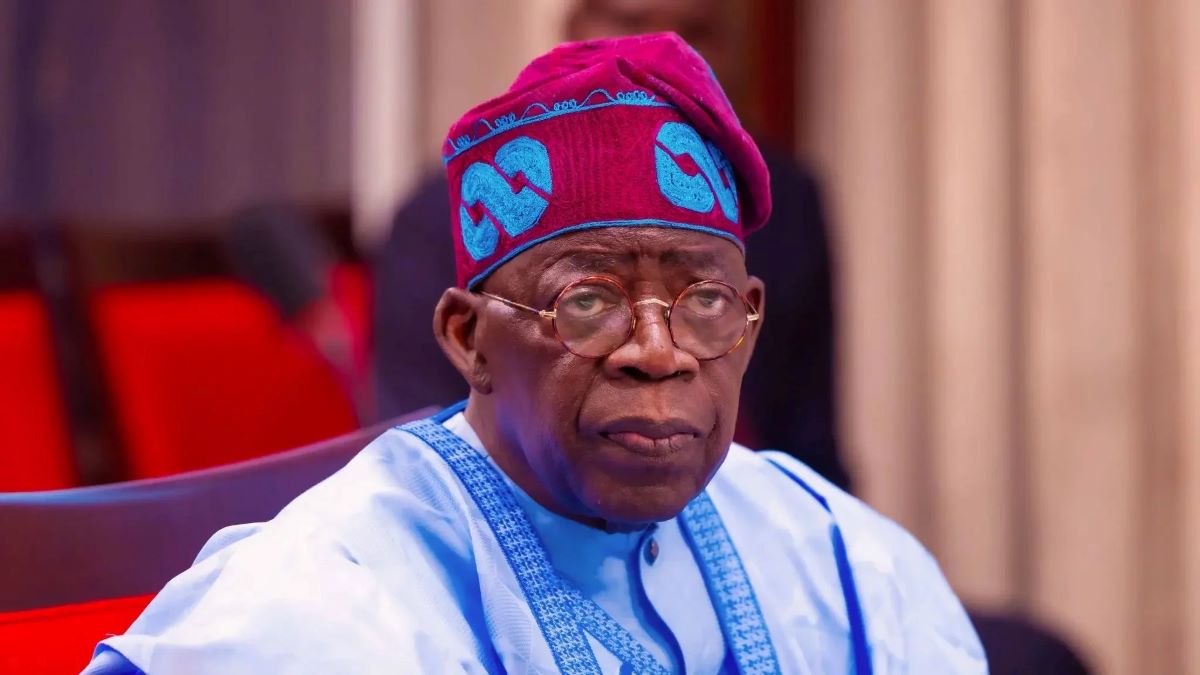
Nigeria’s President Bola Tinubu recently approved ₦3.3 trillion to clear its power sector debt. That is roughly $2 billion. It sounds like a breakthrough. It is not, at least not on its own. To understand why, you need to understand how Nigeria’s electricity system actually works, why the debt piled up in the first place, and why every “fix” in the past has failed to keep the lights on.
First, how the system is supposed to work
Nigeria’s electricity sector has three main players:
GenCos (Generation Companies) — they produce the electricity. There are about 30 of them. They burn gas or use water (hydro) to generate power and push it into the grid.
NBET (Nigerian Bulk Electricity Trading Plc) — this is the government’s middleman. GenCos sell their electricity to NBET. NBET is supposed to pay them.
DisCos (Distribution Companies) — there are 11 of them. They buy power from NBET and distribute it to homes and businesses. They collect your electricity bill.
Simple enough in theory. NBET buys from GenCos, DisCos buy from NBET, customers pay DisCos, money flows back up the chain. Everyone gets paid.
But that is not what happened.
Between 2010 and 2022, the national grid collapsed at least 222 times.
How the debt built up
The chain broke almost immediately after Nigeria privatised the electricity sector in 2013. Here is how:
DisCos collect bills from customers. But millions of Nigerians are not on proper meters, they are on “estimated billing,” meaning the DisCo guesses how much electricity they used. People dispute the bills, refuse to pay, or simply steal electricity by bypassing meters entirely. As a result, DisCos only recover a fraction of the money they should be collecting. For every ₦100 worth of electricity delivered, about ₦44 is never recovered.
Because DisCos are not collecting enough, they cannot fully pay NBET. NBET, in turn, cannot fully pay GenCos. GenCos, unpaid, cannot pay the gas suppliers who fuel the power plants. Gas suppliers, owed billions, start cutting supply. Plants generate less electricity. Nigerians get less power. The cycle deepens.
There is also a second problem. The government kept electricity tariffs deliberately low, below what it actually costs to generate and distribute power, for political reasons. Nobody wants to be the president who makes light bills go up. So the government promised to pay the difference itself, as a subsidy. And then it didn’t, or didn’t pay enough or on time. That unpaid subsidy became more debt.
As a result, by early 2026, GenCos were owed roughly ₦6.8 trillion in total, and about ₦3.3 trillion of that was owed directly to gas suppliers. Gas suppliers, tired of waiting, cut supply. Thermal plants, which generate about 70% of Nigeria’s electricity, started shutting down. The lights went out across the country.
The ₦3.3 trillion Tinubu just approved is essentially what is needed to pay those gas suppliers and restore the fuel supply that keeps the plants running.
Paying debts does not fix electricity. The structural problems are deeper.
Where the ₦3.3 trillion is coming from
Nigeria is not paying this from cash sitting in the government’s account. It is borrowing it.
The government raised ₦501 billion through a bond issued in the capital market, basically asking investors to lend Nigeria money at 17.5% interest over seven years, guaranteed by the federal government. A further ₦223 billion has already been disbursed. The plan is to raise more in phases to cover the total ₦3.3 trillion.
So Nigeria is taking on fresh debt, at high interest rates, to pay off old debt that accumulated because it refused to charge cost-reflective tariffs. That is the hole the sector is in.
There are already questions about the numbers. The GenCos themselves say the figure should be higher. The CEO of the Association of Power Generation Companies, Joy Ogaji, has publicly questioned how the government arrived at ₦3.3 trillion, noting that the figure has shifted from ₦2.3 trillion to ₦2.8 trillion to ₦3.3 trillion with no transparent reconciliation. She says the actual debt owed to GenCos and gas companies combined is closer to ₦6.8 trillion, and the debt grows by about ₦200 billion every single month.
DON’T MISS THIS: Silas Adekunle built a robot, then Apple came calling
It has never been about the money alone
Here is what every Nigerian administration has tried to avoid saying out loud: paying debts does not fix electricity. The structural problems are deeper.
The transmission grid is a bottleneck. Nigeria has about 13,000 MW of installed generation capacity. But the national grid can only transmit 4,000–5,000 MW at any given time. Anything above that and the grid collapses. So even if GenCos were fully paid and produced at full capacity, most of that electricity would be stranded because it cannot get through the grid to reach homes and businesses. Between 2010 and 2022, the national grid collapsed at least 222 times.
Privatisation transferred ownership, not competence. In 2013, Nigeria sold off the generation and distribution companies to private investors, keeping only the transmission network in government hands. The promise was efficiency and investment. What happened instead is that several DisCos have barely invested in infrastructure since takeover. Nigeria’s Senate declared the privatisation a total failure. The NLC called it “a heist”, assets bought for roughly ₦400 billion are now demanding trillions in government intervention while output has barely moved in 13 years. Three of the 11 DisCos were profitable as of the last review. Eight were not.
Tariffs remain political. Cost-reflective electricity tariffs remain one of the most politically toxic policies in Nigeria. Every administration has kept tariffs low to avoid public anger, then promised to pay subsidies to cover the shortfall, then failed to pay those subsidies consistently. The debt is the direct product of that cycle. Until tariffs reflect what power actually costs, with targeted support for the poor rather than blanket subsidies that mostly benefit the rich, the debt will simply rebuild itself.
Gas infrastructure is broken. Nigeria sits on over 200 trillion cubic feet of natural gas. Its power plants currently receive less than 43% of the gas they need to run at capacity. Gas pipelines in the Niger Delta are routinely attacked and vandalised. No serious investment in protecting or expanding this infrastructure has happened at the scale required.
Nobody has ever been held accountable. DisCos that collect transformer money from communities and pocket it face no sanctions. Operators who take over assets and fail to invest face no consequences. Officials who promise reform and deliver nothing face no reckoning. Senator Abdul Ningi (PDP, Bauchi Central) buttressed this point during a Senate debate in December 2024, “Over the years, nobody has been punished for the lapses in the power sector.”
Foreign investors currently rank power unreliability as one of the top reasons to avoid Nigeria.
What nigeria has lost
The numbers here are staggering.
The World Bank estimates that Nigeria’s power crisis costs the country $29 billion every year, roughly 10% of GDP. These losses exceed what the federal government spends on health and education combined.
There are 22 million generators running across Nigeria. Together, they produce about 42,000 MW of electricity, eight times what the national grid delivers. Nigerians spend approximately $14 billion a year buying fuel to run those generators. That is money that could have gone into savings, business growth, school fees, or food.
In 2023 alone, 767 manufacturing companies shut down and 335 more became distressed, contributing to the loss of 18,000 jobs. In the first half of 2025, manufacturers spent ₦676.6 billion on generator fuel and still could not meet their production needs, leading to another 18,935 job losses.
MTN spent the equivalent of about ₦8 billion on diesel in a single year just to keep its network online, roughly 60% of its operating costs. Banks spend 20–30% of operating expenses on diesel. A small tailor shop earning ₦4,000 a day was spending ₦3,000 of that on generator fuel.
Nigeria has built an entire shadow economy around the failure of its electricity sector. And that shadow economy is slowly eating the real one.
What stable power could unlock
Egypt was in a comparable situation not long ago. Between 2015 and 2022, it added 14,000 MW of gas-fired capacity, partnered with Siemens on a grid upgrade, aligned fuel pricing with incentives, and moved from chronic blackouts to surplus generation. Ghana fixed its power crisis between 2012 and 2016 and now exports surplus electricity to neighbouring countries.
Nigeria has everything those countries had, more gas, more sun, more population, and a larger economy. What it has not had is political will, contract discipline, and consistent execution across administrations.
Reliable electricity would mean:
- Factories that can actually run, producing goods for domestic consumption and export, which is the foundation of industrialisation.
- Small businesses that stop bleeding cash on fuel and start reinvesting in growth.
- Foreign investors who currently rank power unreliability as one of the top reasons to avoid Nigeria.
- A tech sector, already among Africa’s most dynamic, that could scale dramatically without self-generating its power.
- Cold chains that actually keep food fresh, reducing the staggering post-harvest losses that push up food prices.
- Hospitals that can run equipment without diesel.
- Students who can study after dark.
The World Bank has calculated that every 1% increase in power outages in sub-Saharan Africa reduces GDP by nearly 3%. Run that in reverse and the scale of the potential gain becomes clear.
Nigeria is not poor in energy resources. It is poor in the governance required to convert those resources into power that reaches people.
So will this ₦3.3 trillion fix it?
Not by itself. As Chinelo Ndurue, a commercial advisor and energy sector analyst, wrote in a widely-cited BusinessDay analysis: “A balance sheet reset is not a system recovery.” If the structural problems are not addressed – the broken tariff model, the underperforming DisCos, the stranded generation capacity, the fragile transmission grid – the debt will simply rebuild itself on a new cycle.
This payment plan is a necessary step. Gas suppliers need to be paid. Plants need to run. But Nigeria has received bailouts, bonds, CBN interventions, World Bank loans, and presidential reform programmes repeatedly for two decades. Each time, the money enters the sector and the problem eventually returns, because the system is designed to produce this outcome.
Nigerians have been here before. They will believe it when the lights stay on.