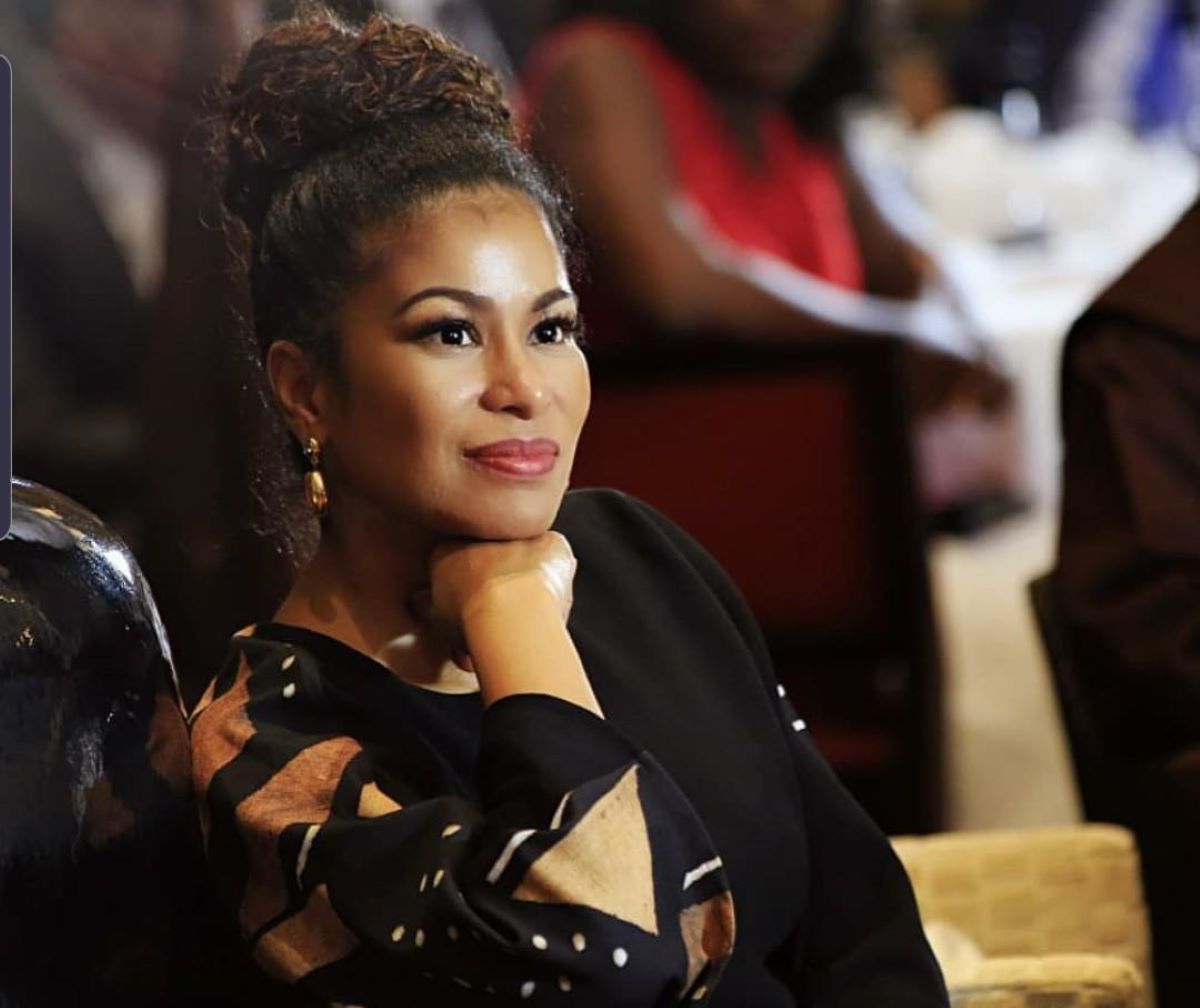
Kenyan journalist and founder of the Africa Leadership and Dialogue Institute, Julie Gichuru says the recolonisation of Africa is already underway. She left a senior role at Mastercard foundation because she could see what was coming. Or more precisely, what had already arrived.
She traces it from Muammar Gaddafi’s assassination to foreign military bases, captured education systems, and a continent still losing control of its own wealth.
Gaddafi was killed on October 20, 2011. NATO warplanes provided air cover. A mob dragged him through the streets of Sirte and filmed it. Across Africa, people watched the footage on their phones. Many celebrated.
Julie Gichuru was watching too. She didn’t celebrate. She wasn’t sure what to feel, and that uncertainty, she says, was the first problem.
“I didn’t know. I wasn’t sure. And this in itself is a problem.”
Twelve years later, the question she keeps returning to is: are the Libyan people better off?
They are not.
Libya has had no functioning central government since 2014. Two rival administrations, one in Tripoli, one in the east, have fought for control with backing from Turkey, Russia, the UAE, and Egypt, among others. Open slave markets were documented on Libyan soil in 2017. The United Nations confirmed it. The International Organization for Migration filmed it.
The oil, the same oil that made Libya the wealthiest country per capita in Africa under Gaddafi, continues to flow. The National Oil Corporation of Libya estimates production at around 1.2 million barrels per day. The revenues go into a national fund split between the rival factions. Ordinary Libyans wait in queues for fuel in an oil-rich country.
Gichuru doesn’t claim to know where the money goes. She just asks.
“Until today, who knows where the wealth of Libya goes?”
Nobody has given a clear answer.
The intervention template
The Libya intervention was authorised by UN Security Council Resolution 1973 in March 2011. It permitted a no-fly zone and “all necessary measures” to protect civilians. What followed was a sustained bombing campaign that destroyed the Gaddafi government’s military capacity and, effectively, the state itself.
The African Union opposed military intervention from the beginning. It proposed a roadmap for a political settlement. The AU’s Peace and Security Council dispatched a panel including the presidents of South Africa, Mali, Mauritania, Uganda, and the Republic of Congo to broker a ceasefire.
They were blocked.
Gichuru heard this story firsthand in Dar es Salaam, at an Africa Leadership Forum attended by sitting and former African presidents. One of the former heads of state on the panel broke down in tears mid-conversation.
“We should have ensured that this did not happen, it should not have happened on African soil. The killing of Gaddafi and the lack of control. Africa had no control over the agenda.”
The AU delegation trying to reach Libya was reportedly told their safety could not be guaranteed. The message was clearly that this was not Africa’s decision to make.
It wasn’t the first time. It won’t be the last.
The Arab spring playbook
Gichuru watched the Arab Spring with the clinical eye of someone who had learned not to trust the energy coming from Western capitals.
“There was an effort to bring it to East Africa. This wonderful positive thing. But a lot of countries ended up under stronger military rule or in a position that was even worse than before.”
The data supports her skepticism. Of the countries most convulsed by the Arab Spring — Tunisia, Egypt, Libya, Syria, Yemen, Bahrain — only Tunisia achieved anything resembling democratic consolidation, and even that collapsed with the 2021 self-coup by President Kais Saied. Egypt returned to military rule within two years. Syria descended into a war that killed over 500,000 people and displaced half the country’s population, according to UN estimates. Yemen is still burning.
“Our agendas are so easily manipulated, overtaken, controlled. And then we end up where we never intended to be. But we were the ones that did all the work.”
DON’T MISS THIS: The Alliance of Sahel States confronts US govt in Washington
The military map nobody talks about
The United States Africa Command (AFRICOM) has a presence in more than 29 African countries. Its primary base is Camp Lemonnier in Djibouti, which hosts approximately 4,000 US personnel and costs around $70 million a year in rent.
France has maintained military bases in Chad, Côte d’Ivoire, Gabon, Djibouti, Senegal, and until recently, several Sahel nations including Mali, Burkina Faso, and Niger, countries that have since expelled French forces following coups.
Russia’s Wagner Group, rebranded under Russian state control after Yevgeny Prigozhin’s death, operates in Libya, Mali, CAR, Sudan, and Mozambique, trading security for mining concessions.
Gichuru is not interested in parsing which foreign military presence is more benign.
“Every military base that is not African on the African continent should not be on the continent. It should be off. Go back to African unity, peace and security, our own forces that protect us.”
This was Gaddafi’s dream too. He pushed for a unified African military command and a single African currency backed by gold, the gold dinar, that would have replaced the CFA franc and reduced African dependence on the dollar and euro. The CFA franc, used by 14 African countries, is still partly controlled by the French Treasury. Paris holds 50% of the foreign exchange reserves of CFA countries in a French account. This arrangement dates to 1945.

Education as a weapon
The subtler weapon, Gichuru argues, has been the curriculum.
“We were encouraged to let go of our culture because it was primitive or savage. And when we went into independence, we kind of shaped this new Africa and modeled ourselves — education systems, government systems — on our colonial masters.”
She points to what she was taught about Dedan Kimathi, the leader of the Mau Mau uprising in Kenya, executed by the British in 1957.
“I was taught — and until maybe five years ago I thought — Dan Kimathi was uneducated and he fought from the forest. But I started doing some research and I realised Dan Washi Kimathi was a very educated man. Highly educated. He was working in a laboratory at that time.”
She pauses on what that means. A man with a career, a future, a family trajectory, who walked away from all of it to fight for a country that would then be taught to think of him as illiterate.
The misrepresentation wasn’t accidental. Colonial education systems were deliberately designed to produce compliant subjects, not critical citizens. The 1925 Phelps-Stokes Commission on African education explicitly recommended practical and agricultural training for Africans over academic education, arguing that Africans didn’t need the same intellectual formation as Europeans. Decades later, the content changed but the architecture held.
The media has reinforced what the schools built.
“When we pick up the stories of African countries, we’re getting it from Reuters, from BBC, from Al Jazeera. Those who have changed the narrative. And those narratives — we know there was a time we thought these were independent media. They have never been independent.”
Foreign aid as debt architecture
The economic structure is no less designed.
Africa holds an estimated 30% of the world’s mineral reserves. It produces 70% of the world’s cocoa but processes less than 20% of it domestically. The value-added such as the manufacturing, the branding, the profit margin, happens elsewhere. The same story repeats across coffee, tea, coltan, lithium, and oil.
The foreign aid that follows conflict or crisis typically comes with structural conditions. Between 1980 and 2000, the IMF and World Bank pushed structural adjustment programs across sub-Saharan Africa that required governments to cut social spending, privatize state enterprises, and open markets to foreign competition. The result was gutted healthcare and education systems, foreign corporations buying up utilities and farmland, and debt that grew even as it was ostensibly being managed.
“There’s somebody waiting for you to finish each other off. Or funding you, in fact, to finish each other off. It has proven to be one of the most lucrative businesses in Africa,” says Gichuru.
The arms trade numbers are not ambiguous. According to SIPRI, Africa accounted for approximately 5.6% of global arms imports between 2018 and 2022. The leading suppliers were Russia, the United States, France, China, and the UK; the same countries with the largest economic and military stakes in the continent.
The brainwash has a return address
Gichuru doesn’t let African leaders off the hook. But she tracks the infrastructure of manipulation upstream.
She describes being in rooms with African ministers of education and watching them get genuinely upset when she asked what their schools were actually teaching.
She’s building an answer. The Africa Leadership and Dialogue Institute she founded runs retreats in a deliberately African way, not board-room settings, not three-piece suits, not the language of international development consultancy.
“When you come into a room dressed as an African, your language will change. Something quite European about your language changes.”
She’s not being mystical. She’s being precise. The frame shapes the thinking. If you enter every conversation about African development through frameworks built in Washington or Brussels, you end up with Washington or Brussels outcomes, dressed in African rhetoric.
What unity actually requires
Gichuru is under no illusions about the African Union. She’s cynical about its current function. She pushes for it anyway.
“As much as we are feeling cynical about the African Union, it’s what we have right now. How do we help it to take control?”
The AU has a defense and security architecture, the African Peace and Security Architecture, built around five regional standby brigades. It has never been fully funded or operationalised. The continent’s combined military spending is dwarfed by France’s defense budget alone.
She wants more than a peacekeeping framework. She wants nuclear deterrence.
“Africa needs nuclear weapons. That’s the basis for international respect. Without that, we have no respect.”
It’s a confrontational position. It’s also a factual one. The NPT has never actually disarmed the states that already have nuclear weapons. It has primarily prevented new states from acquiring them. Every country that has achieved nuclear capability has subsequently been treated differently in international negotiations. Pakistan. India. North Korea. Israel, which neither confirms nor denies its arsenal.
The continent that holds the world’s largest uranium reserves — Niger, Namibia, South Africa — imports the terms of its own security from abroad.
The question Dan Kimathi would ask
Gichuru ends where she begins: with accountability.
“The question I’ve been asking myself for the past few years is, Dan Kimathi, if he rose and looked at us today, would he be proud or would he mourn?“
She is not asking this rhetorically. She left a senior role at the Mastercard Foundation to ask it full-time. She is asking it of presidents, generals, ministers, and bankers. She is asking it of herself.
“We cannot see our great-grandparents bleed and die for Africa to put our children and our grandchildren back into shackles.”
Follow BLKNOW for the stories behind the headlines: Instagram/X