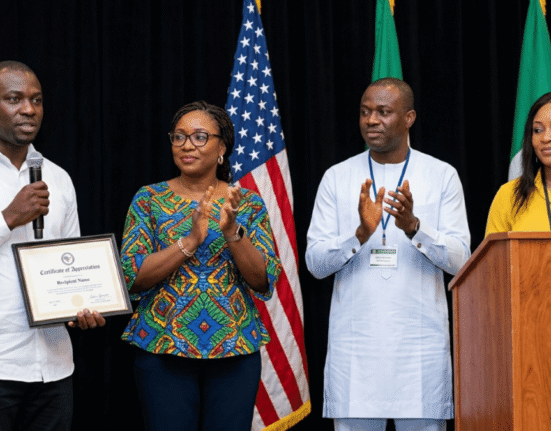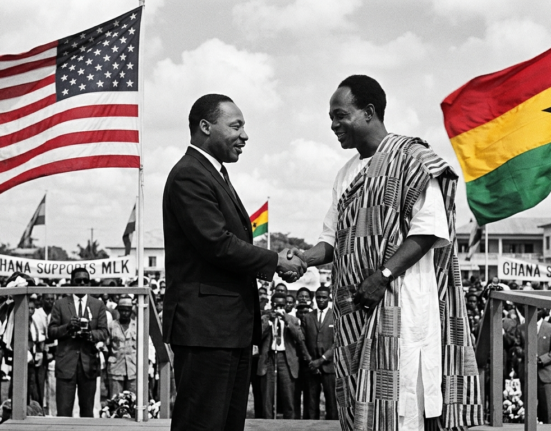

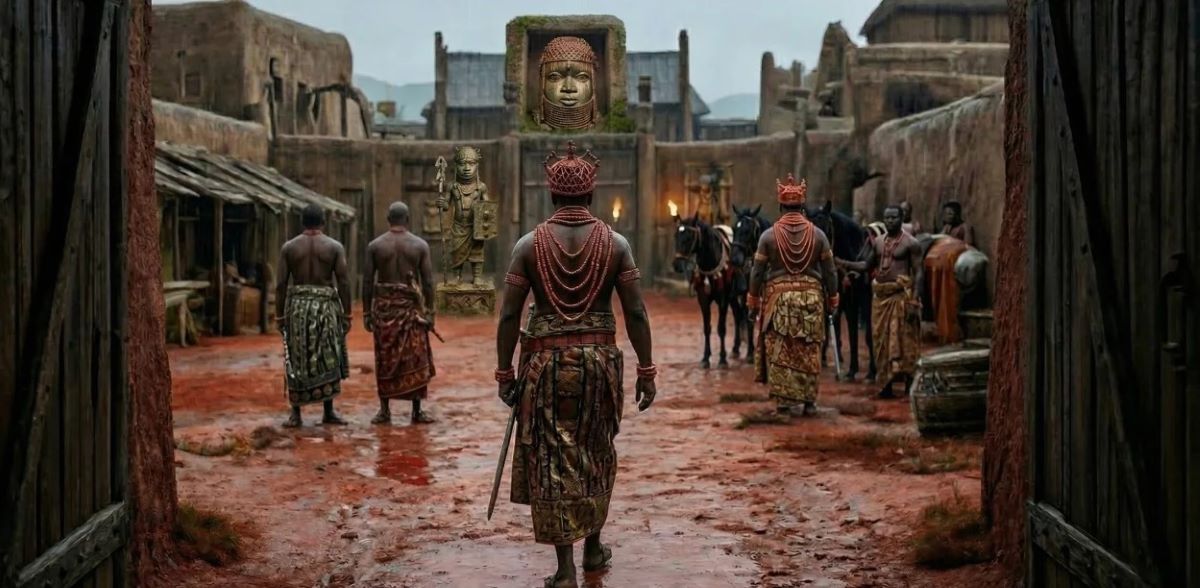
His LegacyLink project records oral histories, scans family objects and is developing AI versions of elders that future generations could question. Afegbua wants to document 1,000 people by 2028.
Malik Afegbua does not know what his great-grandfather looked like.
He does not have recordings of his voice or a body of stories he can return to. For the Nigerian filmmaker and digital artist, that absence has become the problem behind one of his most ambitious projects.
LegacyLink is an attempt to record African elders while they are still alive.
Afegbua interviews them about their lives, films the conversations and documents objects connected to their families and communities. Masks, drums and other heirlooms can be captured with 3D scanning.
The longer-term plan is to use those records to build interactive digital versions of the people interviewed. Someone could eventually ask one of those digital figures a question and receive an answer derived from the person’s recorded testimony.
As of early 2026, the project was still small.
Afegbua told CNN he had completed 15 interviews in Nigeria and planned another 30 before expanding into Kenya and Cameroon. His target is 1,000 people by 2028.
“I don’t know what my great-grandfather looks like. There is no data, there is no library,” he said.

It started with how AI saw older Africans
Afegbua first drew international attention in 2023 with The Elder Series, a collection of AI-generated images showing older Africans dressed for elaborate fashion shows.
His mother was ill at the time.
He told Reuters that he began creating the images while thinking about older people and how rarely they were shown outside illness, dependency or decline. The work spread widely online and was later turned into physical fashion events using older models.
The project also exposed a problem in the image generators he was using.
Afegbua has said that early AI outputs often produced crude or stereotyped representations when he asked for African subjects. He linked the problem to the material on which image systems had been trained and to the way Africans had historically been photographed and documented.
LegacyLink moves that argument away from representation and into source material.
Instead of asking an AI system to invent an African elder, Afegbua is collecting testimony from actual people.
DON’T MISS THIS: Khaby Lame: The man who conquered the internet with silence
The difficult part is deciding what should be preserved
One of the first problems was not technical. It was consent.
When Afegbua went to Ikorodu in Lagos State to collect oral histories, a local chief told him that some cultural stories were not meant to be shared outside the community.
Afegbua returned with a presentation explaining the project and how the technology would be used. The elders eventually agreed to take part. The work in Ikorodu involved the IGA Nigeria Development Lab and UNESCO.
Some subjects remained off limits.
Afegbua said interviews touching on the Nigerian Civil War produced hesitation among people who had lived through it. Some did not want to speak about the period.
He said, “the trauma is still very present. We never push.”
That decision is central to any archive built from living memory.
Recording a story does not automatically give the collector the right to publish it. Family knowledge, religious practice and community history can carry restrictions that are not obvious to someone approaching them as data.
LegacyLink will have to preserve those boundaries as carefully as it preserves the recordings.
AI creates another accuracy problem
Turning interviews into an AI system introduces a second risk.
A recording can be checked against what a person actually said. A generative model can produce a sentence the person never said.
Afegbua has acknowledged that problem.
He described using controlled datasets and guardrails to limit what the models can generate. The aim is to keep an interactive version of an elder tied to documented material rather than allowing a general-purpose AI system to improvise freely.
If a digital reconstruction invents an opinion, date or memory, the project stops being an archive and starts creating new history.
Language presents a related problem.
Afegbua wants the material available in multiple African languages but has said he still intends to rely on human translators because AI systems do not reliably understand the meaning and nuance of many of those languages.

He also wants control of the data to remain in Africa
Afegbua has taken a harder position on ownership. He does not want the cultural data collected through the project sold to large technology companies.
“I don’t want to sell this data to any big tech,” he noted.
He said the material should remain under local control. That creates a financing question LegacyLink has not yet answered at scale.
Recording hundreds of interviews, storing video and 3D files, developing language systems and maintaining interactive models all require money and technical infrastructure.
Commercial partnerships could provide both. They could also give outside companies access to material that Afegbua says should remain under African control.
For a project aiming to collect 1,000 lives, ownership of the archive will eventually matter as much as the technology used to build it.
ReMemory is aimed at places rather than people
Afegbua is also developing a separate project called ReMemory.
Where LegacyLink deals with living testimony, ReMemory focuses on physical heritage.
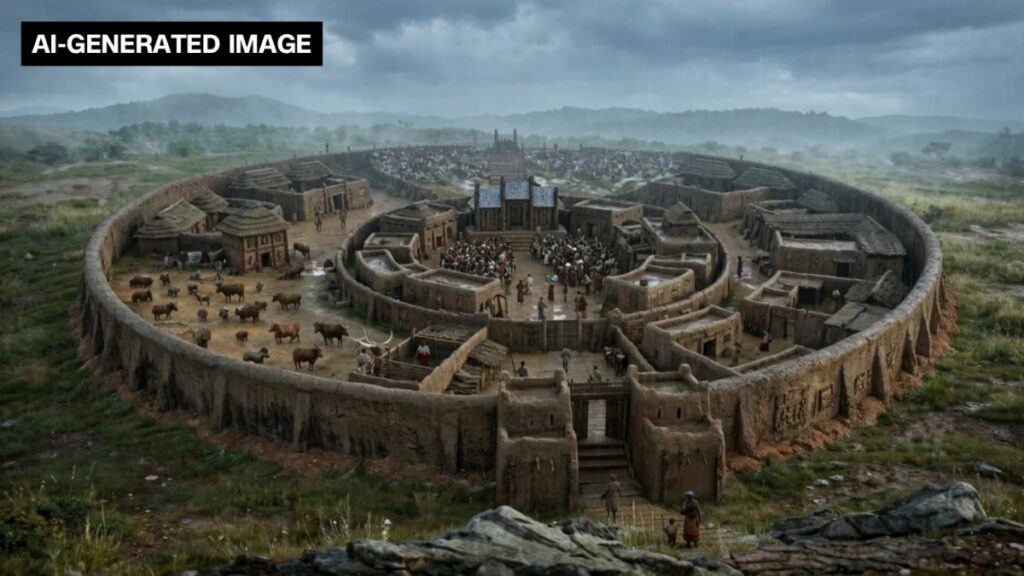
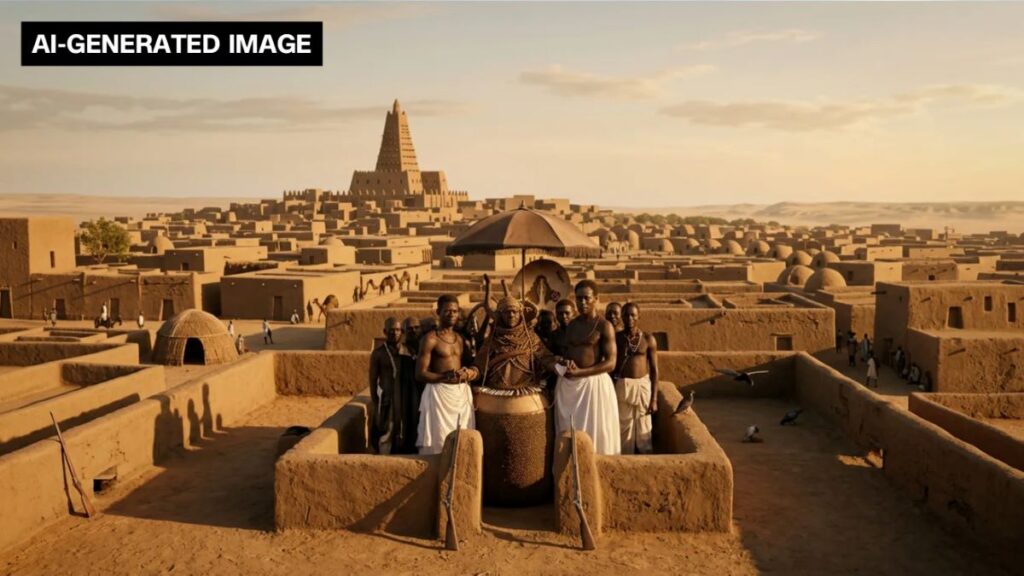
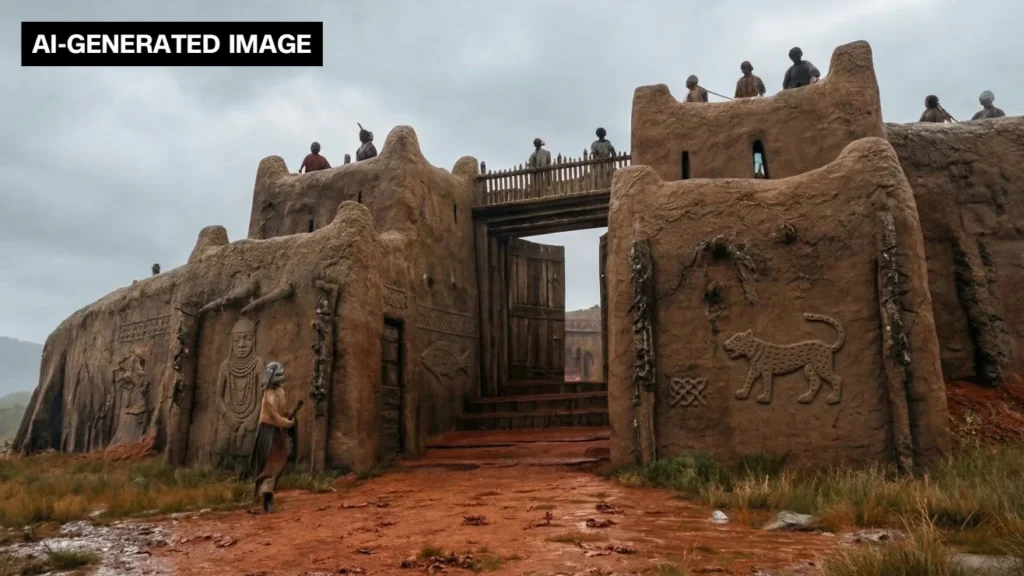
The project uses archival records, academic research, AI imaging and immersive technology to reconstruct sites that have disappeared, deteriorated or become difficult to visit. Afegbua’s own project material lists the Benin City earthworks among its planned reconstructions.
The earthworks around Benin are far larger than the remains visible in the modern city suggest.
Nigeria’s submission to UNESCO describes an extensive system of settlements, ramparts and ditches across the Benin region, with some sections dating to around the eighth century. Modern development has destroyed substantial portions of the structures.
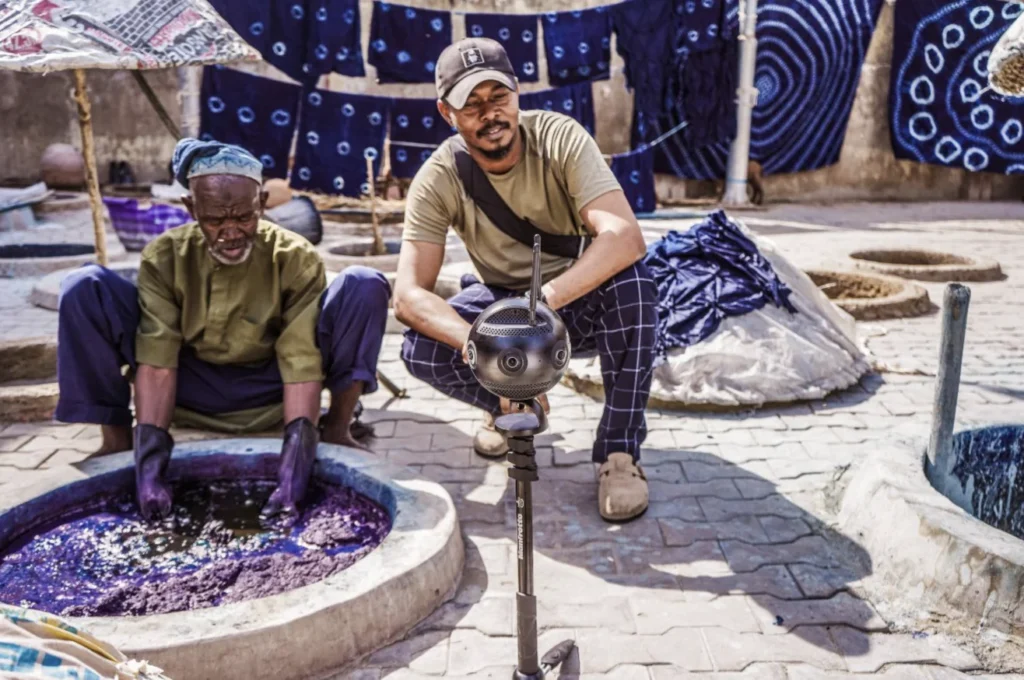
Afegbua has also worked at Kano’s Kofar Mata dye pits, where indigo dyeing has been practised for centuries. Historical accounts commonly date the pits to 1498.
ReMemory proposes digital access where physical heritage has become incomplete or difficult to reach. It cannot replace the original site.
It can preserve a record of what remains and give people another way to encounter material that might otherwise survive only in photographs, drawings and academic descriptions.
Follow BLKNOW on social media for amazing stories that make sense of Africa’s history, its people and its future: Instagram/X