
Governments want capital, skills and global networks. Diaspora communities want something in return: citizenship, political voice, investment protection and institutions they can trust.
African governments have spent years asking their diasporas to stay connected. Increasingly, they are asking for something more specific.
In August, Nigeria told citizens abroad that remittances should become the “floor” of their engagement with the country, not the ceiling.
Ghana’s central bank is trying to move diaspora money from household support into productive investment.
Senegal is designing funds that would turn some remittance flows into property and infrastructure. The African Union is discussing an African-Diaspora Investment Corridor built around money, expertise, technology and international networks.
The shift is not simply about attracting more money. It is about converting a relationship that has often been emotional, familial or cultural into something more institutional.
That creates a harder question for governments: what are they prepared to offer in return?
Governments want remittances to become capital
African diasporas already send substantial amounts home. The problem, from the perspective of many governments, is what happens after the money arrives.
Senegal says its diaspora sends home about CFA2.2 trillion annually, close to 10% of GDP. Most of it goes into consumption. The government has proposed a Senegal-Diaspora Real Estate Fund intended to turn part of those flows into income-generating property, and has separately discussed a Diaspora Investment and Amortization Fund for real estate and infrastructure.
Ghana is making the same argument more directly.
Bank of Ghana governor Johnson Asiama described the diaspora in April as a “strategic asset” and argued that remittances should do more than support consumption and macroeconomic stability. The central bank wants more of those flows channelled into investment.
Nigeria has gone further still.
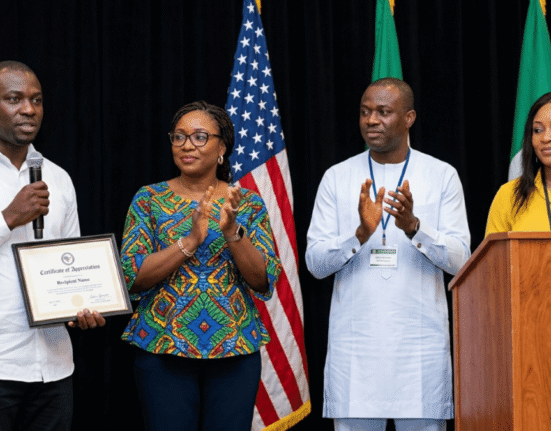
At the Nigeria Diaspora Economic Conference in Toronto, President Bola Tinubu, represented by his chief of staff, Femi Gbajabiamila, urged Nigerians abroad to invest in sectors ranging from healthcare and technology to housing, mining and export manufacturing.
He also called for professionally governed investment clubs, sector funds and venture networks rather than scattered deals built around personal relationships. Crucially, the government acknowledged what diaspora investors expect in return: predictable rules, transparent project pipelines, efficient consular services and stronger protection from fraud.
That is the bargain taking shape.
Governments want diaspora money to become equity, property, infrastructure and business capital.
Diaspora investors want evidence that those assets will be protected.
Trust is the real bottleneck
This is where the economic case becomes less straightforward.
Diaspora investors may have stronger emotional ties to African markets than conventional foreign investors, but they still face currency risk, land disputes, weak contract enforcement, regulatory uncertainty and fraud.
Research on Ghana by the International Growth Centre found trust to be one of the most persistent concerns among diaspora investors and private-sector intermediaries. Some investors had lost money through relatives or informal middlemen. Others were wary of exchange-rate losses and weak governance.
The pattern was familiar: investors often started small, tested the system and committed more only after seeing that their money and returns were secure.
That is important because diaspora capital is sometimes described as unusually patient.
It may be.
But patient capital is not charitable capital.
A Ghanaian professional in Washington or Nigerian executive in Toronto still has other places to put money. Patriotism does not remove the need for competitive returns, credible managers or enforceable contracts.
BLKNOW has already examined the scale of this challenge in Nigeria, where the government is targeting $1 billion a month in officially recorded diaspora remittances while trying to deepen formal financial channels. Read: Nigeria’s $1 Billion Diaspora Remittance Target Raises a Bigger Question for Africa.
Not every diaspora is being courted for the same reason
“Diaspora” can conceal very different relationships.
Recent emigrants usually retain direct family, citizenship and economic ties to an African country. Governments tend to approach them as investors, professionals, exporters, political constituencies and sources of technology or market access.
The historic African diaspora presents a different case.
Ghana, Benin, Sierra Leone and Guinea-Bissau have created special citizenship pathways for descendants of enslaved Africans and other members of the historic diaspora. Since 2016, at least 1,213 people have received citizenship through such programmes, according to the Migration Policy Institute.
Benin has gone furthest in putting the relationship into law.
Its 2024 legislation allows qualifying Afro-descendants whose ancestors were deported through the transatlantic slave trade to seek Beninese nationality. The government now operates a formal application system and has held repeated citizenship ceremonies in 2026.
The language here is different from the investment pitches directed at recent emigrants. Benin describes the policy in terms of historical responsibility, recognition and reconnection.
Someone seeking citizenship because an ancestor was forcibly removed from Africa is not simply a prospective investor or tourist.
For the historic diaspora, the return being sought may be legal, cultural or personal before it is economic.
DON’T MISS THIS: How Africans and Black Americans Lost a Powerful Alliance
What does the diaspora get back?
This is where many government strategies remain less developed.
Recent emigrants often want investment protection, easier banking, clear property rights, political participation, portable social benefits and recognition of professional qualifications.
Kenya’s foreign-policy framework, for example, commits the government to diaspora welfare, stronger consular support, social-security portability, voter education and measures to reduce investment risk while also seeking diaspora capital and expertise.
Historic diaspora communities may place greater value on citizenship, residency and recognition.
But citizenship schemes also create practical questions. Who qualifies? How much does an application cost? What rights come with the passport? And what happens when wealthier returnees enter housing or land markets already under pressure?
The Migration Policy Institute notes that West African citizenship programmes have already faced criticism over costs, DNA requirements, uneven implementation and concerns about rising living costs in communities attracting returnees.
The relationship has to become reciprocal
Africa does not need every member of its diaspora to relocate.
Governments want people abroad to invest, open markets, transfer skills, bring businesses, build networks and, in some cases, establish a formal legal relationship with the continent.
That can be mutually valuable. But it cannot rest on nostalgia alone.
If governments want diaspora investors to accept African risk, they will have to provide better protections.