African independence leaders, Black American activists and Caribbean intellectuals once saw their struggles as parts of the same political project.
W.E.B. Du Bois worked alongside African nationalists. Kwame Nkrumah welcomed Black thinkers and organisers to Ghana. Martin Luther King Jr. attended Ghana’s independence celebrations. Malcolm X travelled across Africa seeking international support for Black Americans. Decades later, Black activists in the United States helped force apartheid South Africa onto Washington’s political agenda.
That alliance was never perfect, but it was organised, influential and powerful enough to attract the attention of governments.
Today, much of that political connection has been replaced by suspicion. Africans accuse Black Americans cultural ignorance. Black Americans accuse Africans of contempt, betrayal or distancing themselves from the history of slavery. Arguments over identity, immigration, culture and suffering now travel faster than the history that once connected both communities.
So what happened?
How did a relationship built around liberation become trapped in stereotypes and competition? And who benefits when Africans and Black Americans see one another as rivals rather than political partners?
The alliance came before the hostility
The political bridge between Africa and Black America did not begin during the civil-rights era. Its foundations were laid decades earlier through Pan-African organising.
In 1919, W.E.B. Du Bois, one of the most influential Black American intellectuals of his generation, worked with Senegalese politician Blaise Diagne to organise the Pan-African Congress in Paris. The gathering brought together delegates concerned with colonial rule, racial discrimination and the political future of people of African descent. It sought a place for Africans and diaspora communities within the new international order being negotiated after the First World War.
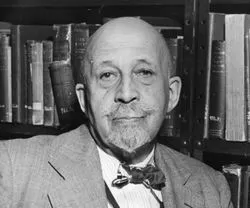
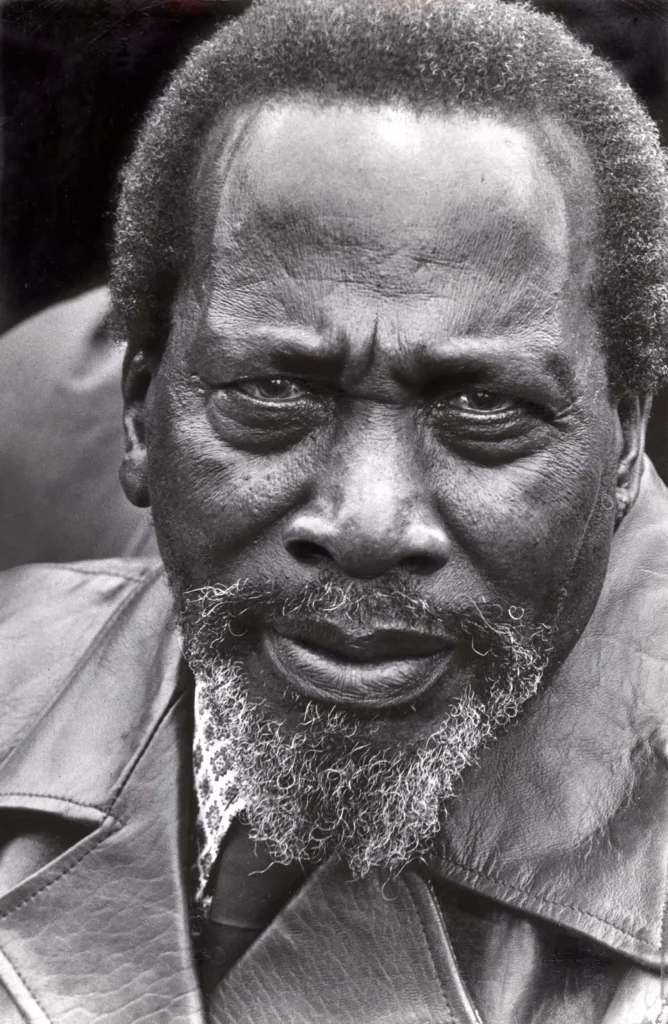
The 1945 Pan-African Congress in Manchester strengthened that connection. Participants included Du Bois, Trinidadian organiser George Padmore, Ghanaian independence leader Kwame Nkrumah and Kenya’s future president, Jomo Kenyatta. What later appeared as separate movements, African decolonisation and diaspora Black liberation, were developing within overlapping intellectual and political networks.
This history matters because modern Pan-Africanism was never exclusively continental. Black thinkers in the Caribbean, Europe and the United States helped shape its language, institutions and political ambitions. At the same time, African liberation struggles provided diaspora communities with a concrete vision of Black self-government.
Africans and Black Americans did not discover solidarity after independence. In many cases, they helped construct the political ideas that made independence possible.
Ghana became a meeting place for the Black world
No African country embodied this alliance more clearly than Ghana under Kwame Nkrumah.
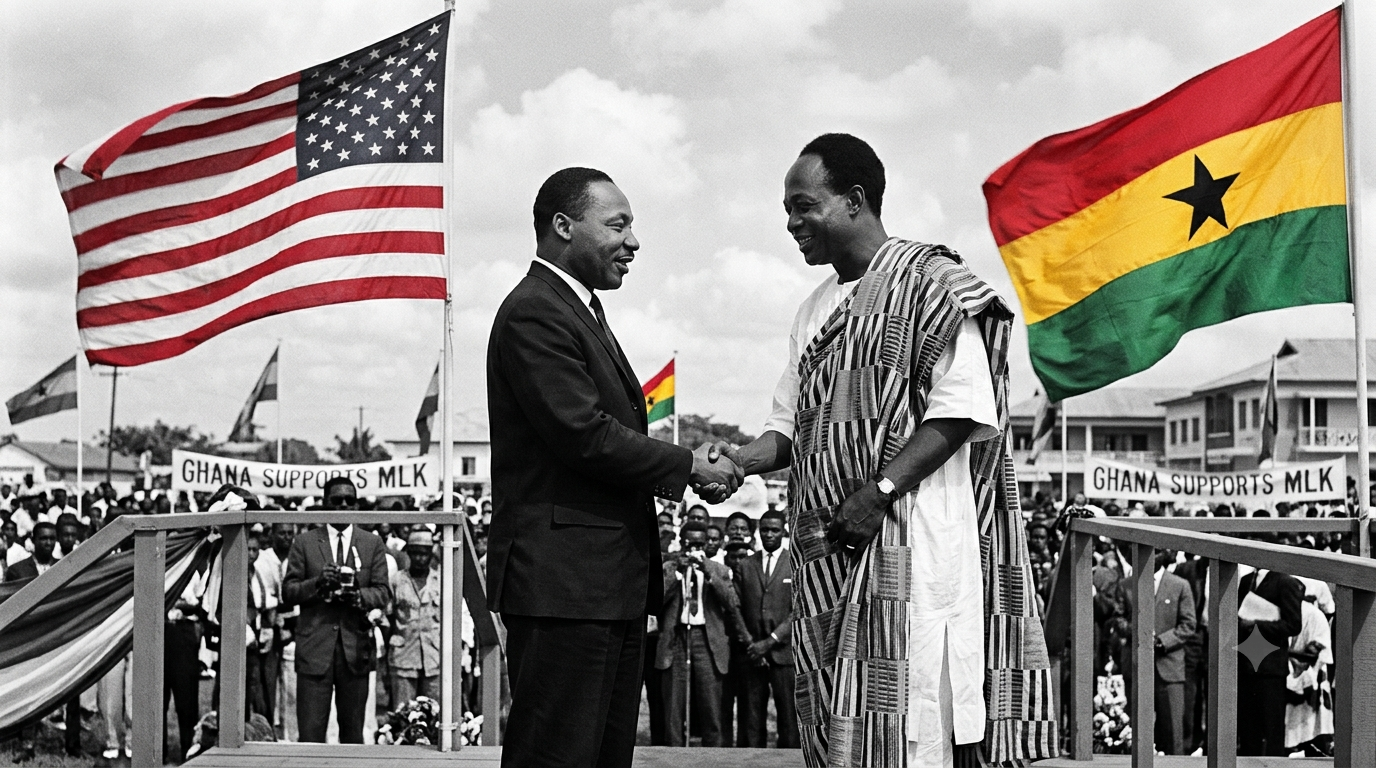
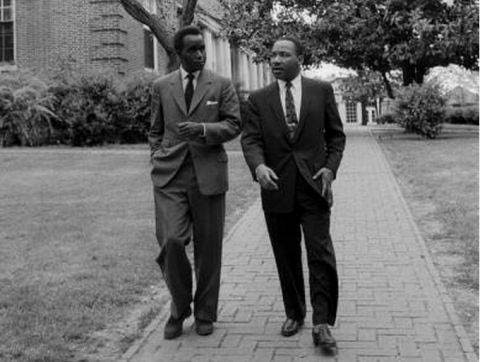
When Ghana became independent from Britain in March 1957, Nkrumah invited Martin Luther King Jr. and Coretta Scott King to attend the celebrations. King saw a direct connection between Ghana’s struggle against colonial rule and the campaign against segregation in the United States. The Stanford King Institute describes the journey as part of a growing international alliance among oppressed peoples.
At the independence ceremony, King watched the British flag come down and Ghana’s flag rise. He later argued that the birth of the new country would have consequences beyond Africa, including for the struggle of Black Americans in the United States. Ghana demonstrated that an apparently permanent system of domination could be defeated.
The connection was also strategic. Nkrumah reportedly made clear that American claims of freedom and democracy would remain unconvincing while Black Americans were treated as second-class citizens. Ghanaian independence gave Black Americans a new source of international leverage: the United States now had to defend its racial system before African countries whose diplomatic support it wanted during the Cold War.
Ghana soon became a destination for Black writers, journalists and organisers from the diaspora. Du Bois moved there at Nkrumah’s invitation to work on the proposed Encyclopedia Africana. Maya Angelou, Julian Mayfield, Alice Windom and other diaspora figures joined an expatriate community in Accra that connected African politics with Black struggles abroad.
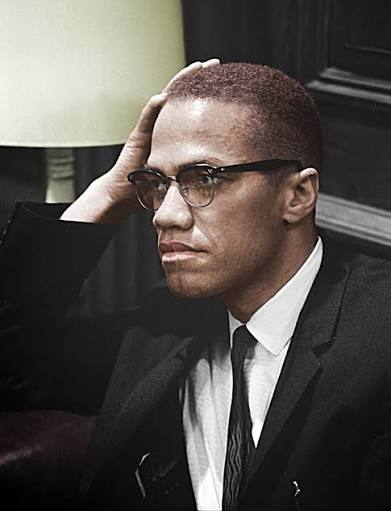
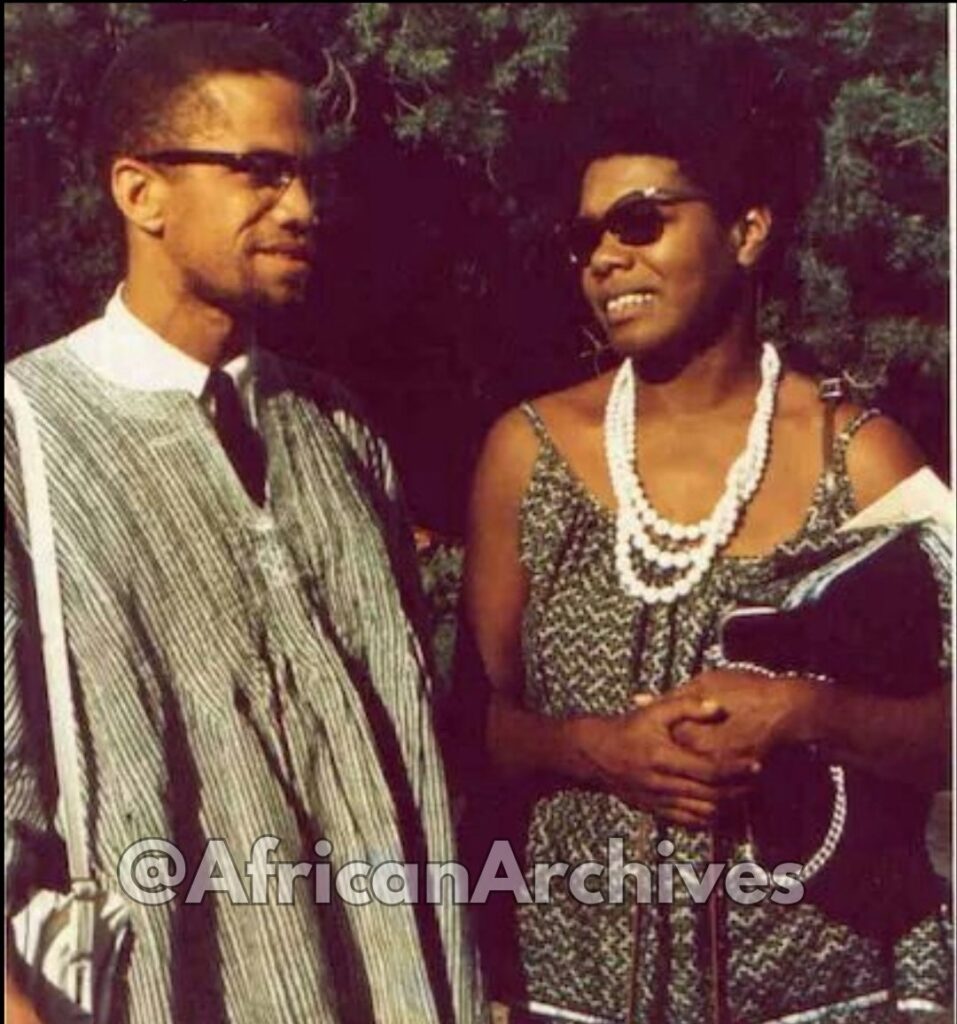
When Malcolm X visited Ghana in 1964, members of this community introduced him to diplomats, African officials and international revolutionaries. Those exchanges helped broaden his campaign to present the treatment of Black Americans not merely as a domestic civil-rights matter, but as an international human-rights question.
For a time, Ghana was more than a nation-state. It was an intellectual and political meeting place for the Black world.
African independence strengthened Black America’s argument
The timing of African decolonisation was important.
Between 1945 and 1960, dozens of countries across Africa and Asia gained independence. New African states entered the United Nations while the United States and Soviet Union competed for influence across the developing world.
This placed the United States in an uncomfortable position. Washington presented itself as the leader of the democratic world, yet Black Americans faced segregation, disenfranchisement and racial violence at home.
African leaders could expose that contradiction. Every image of police attacking civil-rights demonstrators weakened America’s claim to moral leadership. Every newly independent African government created another diplomatic audience before which the United States had to explain its racial order.
Black American activism also strengthened African arguments against colonialism and white-minority rule. Civil-rights leaders, Black newspapers, churches, unions and political organisations helped keep African liberation struggles in public view. They challenged the idea that colonial domination in Africa and racial domination in America were unrelated problems.
The relationship became especially visible in the struggle against apartheid. Black activists and organisations in the United States helped build pressure for sanctions against South Africa. By the late 1970s and 1980s, grassroots campaigns were pressing universities, corporations and governments to divest from institutions linked to apartheid. In 1986, the U.S. Congress passed the Comprehensive Anti-Apartheid Act over President Ronald Reagan’s veto.
The alliance did not eliminate colonialism or racism. But it demonstrated that coordinated political pressure across borders could influence governments, international institutions and economic policy.
Why Black international solidarity attracted attention
During the Cold War, the United States viewed African decolonisation through the wider contest with the Soviet Union.
Washington was concerned that newly independent African countries might align with Moscow, support revolutionary movements or form an influential non-aligned bloc. The U.S. government viewed the 1955 Bandung Conference, which brought Asian and African states together, with caution, partly because it appeared to signal a political movement beyond Western control.
At the same time, Black political movements inside the United States were becoming more international in their language and alliances. Malcolm X connected American racism to colonialism. The Black Panther Party drew inspiration from revolutionary movements abroad. Activists travelled between Africa, the Caribbean, Europe and the United States.
This did not mean every African leader and Black activist shared the same ideology. It meant that governments understood the strategic importance of those connections.
DON’T MISS THIS: America owns Afrobeat: Audu Maikori says what nobody wants to admit
The United States had already demonstrated its willingness to target Black political organisation. In 1967, the FBI expanded its Counterintelligence Program, or COINTELPRO, to organisations it classified under the category “Black Nationalist–Hate Groups.” National Archives records show that the programme targeted Black organisations and leaders for surveillance and disruption.
The FBI monitored, infiltrated and attempted to weaken organisations including the Black Panther Party. Martin Luther King Jr. and the Southern Christian Leadership Conference were also subjected to extensive surveillance and hostile action by the Bureau.
These records do not prove that the U.S. government created the divide between Africans and Black Americans. Nor do they establish a single coordinated operation whose purpose was to make both groups hate one another.
They establish something narrower but still important: the U.S. government regarded independent Black political organisation as a security concern and sometimes acted deliberately to weaken it.
Africa also became a Cold War battleground
Foreign intervention affected the African side of the relationship as well.
The Congo crisis was one of the earliest major Cold War confrontations in postcolonial Africa. After independence in 1960, the country became the site of conflict involving domestic factions, Belgium, the United States, the Soviet Union and the United Nations. The crisis contributed to the removal and eventual killing of Prime Minister Patrice Lumumba and the rise of Joseph Mobutu.
Similar patterns appeared elsewhere. Liberation struggles and civil wars in countries such as Angola became proxy conflicts involving the United States, Soviet Union, Cuba, South Africa and competing African movements.
These interventions did not focus primarily on separating Africa from Black America. Their immediate goals concerned ideology, military influence, strategic resources and geopolitical alignment.
But they weakened the political conditions that had supported international Black solidarity. African leaders became preoccupied with coups, war, debt, regime survival and economic crisis. Liberation movements were divided according to which foreign power supported them. Political independence did not produce the continental institutions that earlier Pan-African thinkers had imagined.
The bridge between Africa and Black America had depended heavily on activists, intellectuals and a small number of political leaders. It was not converted into institutions strong enough to survive coups, ideological shifts and changing governments.
The real separation
Government disruption and Cold War intervention explain only part of the story.
Africans and Black Americans were also separated by distinct historical experiences that long preceded the twentieth-century alliance.
The Atlantic slave trade violently removed millions of Africans from their societies. Enslaved people and their descendants built new cultures in the Americas and Caribbean under systems designed to sever family, language and political connections with Africa.
Meanwhile, colonialism reorganised African societies. European powers drew borders, imposed administrative systems, classified populations and redirected economies towards extraction. At independence, Africans inherited states shaped by colonial rule, often containing many linguistic, ethnic and religious communities.
These histories produced different ways of understanding identity.
For many Black Americans, race became a central political category because the United States organised citizenship, property, education and social status through a rigid racial hierarchy. Black identity developed through slavery, segregation and resistance to white supremacy.
Many Africans grew up in societies where nationality, ethnicity, language, religion or region were more immediate markers of identity. A Nigerian might think first of being Yoruba, Igbo, Hausa, Christian, Muslim or Nigerian—not simply Black—because Blackness did not distinguish them from most people around them.
The groups were connected by ancestry and global racial hierarchy, but they were not culturally interchangeable.
Pan-African solidarity had once provided a political framework through which those differences could be understood. As that framework weakened, difference increasingly became distance.
National interests overtook international solidarity
African independence also changed the priorities of African political leaders.
Before independence, anti-colonial movements could imagine liberation as a shared international project. After independence, governments had to control territory, protect borders, manage economies and survive domestic political challenges.
National interest frequently displaced Pan-African ambition.
Some governments continued to support liberation movements abroad. Others built close relationships with Western powers, restricted domestic opposition or treated radical activists as threats. Leaders could invoke African unity in speeches while defending political systems that depended on national borders and centralised state power.
The problem was structural as much as ideological. The international system rewarded governments for protecting sovereignty, not for sharing authority with a wider Black political community.
As a result, Pan-Africanism often survived as language without acquiring sufficient institutional power.
The Organisation of African Unity brought independent states together, but it was primarily an organisation of governments. It did not create a durable political structure connecting African citizens with diaspora communities on equal terms.
The alliance began to lose its organising centre.
Migration reunited people who barely knew one another
Large-scale African immigration to the United States created a new phase in the relationship.
In 1980, Black immigrants represented roughly 3% of the Black population in the United States. By 2019, there were about 4.6 million foreign-born Black people in the country, representing approximately one in ten Black residents. More recent Pew Research Center analysis found that the Black immigrant population reached 5.6 million in 2024.
Africans and Black Americans were now meeting not only through political conferences or liberation campaigns, but in schools, workplaces, neighbourhoods, churches and universities.
That proximity did not automatically produce understanding.
Some African immigrants arrived with stereotypes about Black Americans formed through films, news reports and other global media. Black American communities were often shown internationally through images of crime, poverty and social disorder, with little explanation of segregation, housing discrimination, unequal schooling or mass incarceration.
Black Americans also encountered Africa through distorted representations. Western coverage frequently reduced the continent to war, famine, corruption and disease. Africa appeared as a single impoverished place rather than a continent containing many different societies and histories.
The two groups could therefore meet while already carrying myths about one another.
The competition
One of the most damaging narratives emerged around African immigrant success.
Some African immigrants in the United States achieved high levels of education and entered professional careers. Their outcomes were occasionally used to argue that Black Americans are lazy and could overcome inequality through discipline, education or stronger family values.
But such comparisons ignore immigration selection.
People who can migrate internationally are not a random sample of their home countries. U.S. immigration rules, professional recruitment, university admissions and financial barriers often select people with educational qualifications, resources or supportive family networks.
Black Americans, by contrast, are not an immigrant population selected through those filters. Their economic position reflects generations of exclusion from property ownership, employment, education and credit.
The comparison therefore creates a false contest. One Black group is presented as evidence against another.
For some immigrants, distancing themselves from Black Americans can appear to offer protection from racial stereotypes. For some Black Americans, African immigrants can appear to be beneficiaries of opportunities created through a civil-rights struggle they did not personally inherit.
The resentment moves sideways, even though the hierarchy producing it remains largely intact.

Social media turned misunderstanding into entertainment
Earlier divisions were shaped by slavery, colonialism, state policy and migration. Today, they are intensified by the business model of digital platforms.
Social media rewards engagement, and outrage produces engagement quickly.
A careful discussion about the different histories of Africans and Black Americans may attract modest attention. A humiliating generalisation about either community can produce millions of views, angry responses and days of reaction content.
The pattern is predictable.
A provocative statement appears. Members of the targeted group respond. The response is circulated as evidence that the entire community is hostile. Creators discover that diaspora conflict attracts attention, so they produce more of it. Extreme opinions become more visible than ordinary relationships.
The platforms do not need to possess a political programme against Black unity. Their commercial incentives are enough.
Conflict keeps users watching. Humiliation generates comments. Identity-based anger encourages sharing. Reconciliation rarely performs as well.
The “diaspora war” is therefore not simply a spontaneous disagreement between communities. It has become a content category.
So who benefits?
There is no single beneficiary and no single institution controlling the divide. Different actors benefit in different ways.
Social-media platforms
Platforms earn attention, data and advertising revenue from repeated conflict. Whether the argument concerns slavery, Afrobeats, immigration or cultural ownership, the commercial value comes from keeping users emotionally engaged.
Political elites
Division makes collective political organisation harder. When people direct their anger towards other Black communities, less attention is paid to governments, corporations and institutions responsible for inequality, corruption or exclusion.
Cultural corporations
African and Black American music, fashion, language and aesthetics generate enormous global value. Yet the companies controlling financing, publishing, distribution, intellectual property and technology are often separate from the communities creating the culture.
Africans and Black Americans argue over who owns the origin while larger institutions capture much of the revenue.
National elites
A serious Africa–diaspora alliance would demand more than symbolic homecoming events. It could raise difficult questions about citizenship, investment, land, trade, political accountability and the treatment of diaspora returnees.
Rhetorical Pan-Africanism is easier to manage than an organised constituency with financial and political demands.
Foreign powers
A fragmented Black world possesses less capacity to coordinate around trade, foreign policy, cultural ownership, migration and international representation.
This does not require a secret plan. Fragmentation serves existing power arrangements whether or not anyone centrally designed it.

The deeper failure is institutional
The most revealing fact is not that Africans and Black Americans sometimes misunderstand one another. Communities separated for centuries will inevitably contain differences.
The deeper failure is that so few institutions exist to help them understand and work through those differences.
African students can complete their education knowing almost nothing about Reconstruction, Jim Crow, redlining, the civil-rights movement or the political history of the Caribbean.
Black American students may learn about Africa mainly through slavery and colonialism, with limited exposure to precolonial states, modern African politics or the continent’s intellectual traditions.
There is no major, widely accessible Africa–diaspora exchange programme operating at the scale of Europe’s Erasmus programme. There are too few permanent research centres, media organisations, investment networks and educational institutions designed to connect the communities.
Political solidarity cannot survive indefinitely through music festivals, celebrity visits and emotional appeals to shared ancestry.
The earlier alliance was built by organisers, newspapers, congresses, universities, churches, liberation movements and political parties. Its decline left a vacuum. Social media personalities now occupy space once held by institutions.
The history proves the divide is not inevitable
Africans and Black Americans do not need to pretend they share an identical culture or historical experience.
They do not.
Black Americans developed a distinct peoplehood through centuries of life, oppression and resistance in the United States. Africans belong to many nations, cultures and political traditions. Caribbean, Afro-Latin and European Black communities add further experiences to the global diaspora.
Unity cannot mean erasing those differences.
But history shows that political cooperation is possible without cultural sameness.
Du Bois and Nkrumah were not identical. Martin Luther King Jr. and African independence leaders did not operate under the same conditions. Malcolm X and Ghana’s political establishment did not agree on everything. Anti-apartheid organisers in the United States did not need to become South African to recognise a shared struggle.
They were aligned because they understood that colonialism, racial domination and economic power crossed borders.
That is the lesson lost in today’s diaspora wars.
The most important question is not whether every conflict was secretly engineered. Some differences were created by history. Some were exploited by governments. Others were widened by migration, media and political interests.
The more useful conclusion is this:
The divide between Africans and Black Americans is historically produced, politically useful and commercially profitable.
Those who benefit do not need to create every argument. They need only operate in a world where Black communities remain disconnected, poorly informed about one another and unable to convert cultural influence into organised power.
The real challenge, therefore, is not to demand abstract unity.
It is to rebuild the infrastructure that once made solidarity possible: shared education, credible media, research, trade, political advocacy, cultural ownership and institutions capable of surviving beyond individual leaders.
Africans and Black Americans have already proved that they can build together. What they failed to build was a bridge strong enough to outlive the generation that created it.