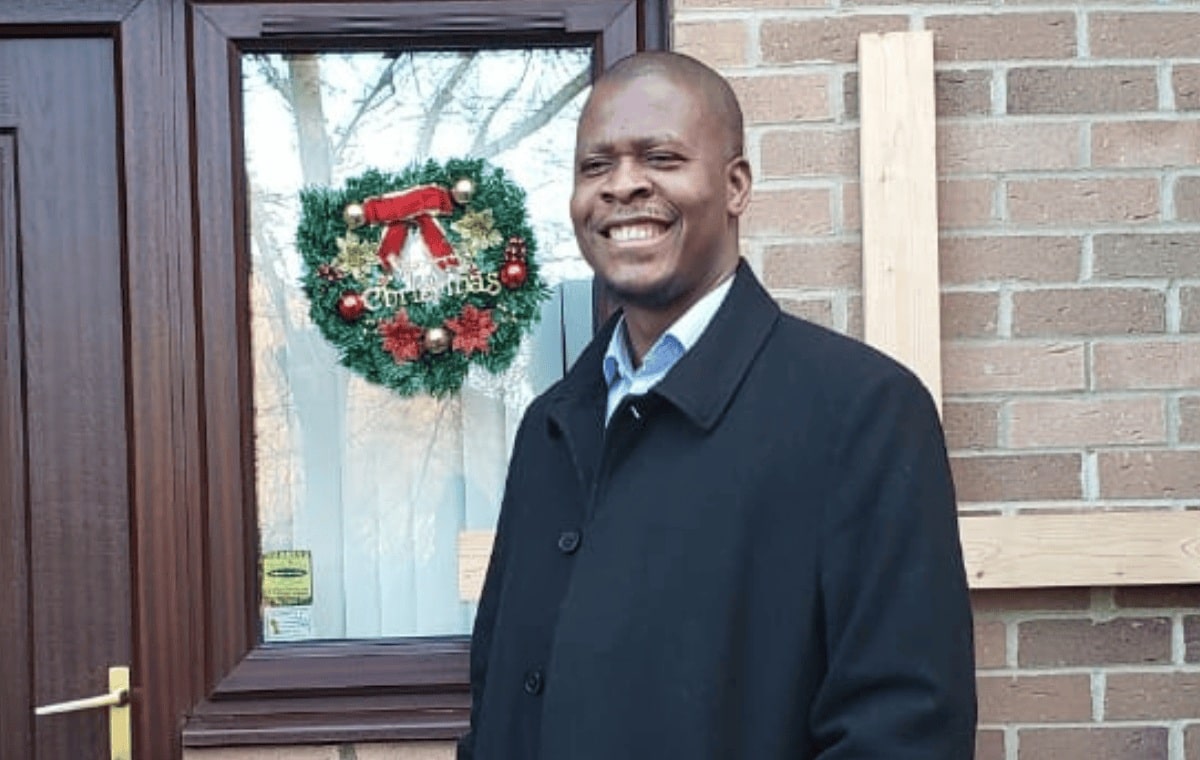
He left local market in Lagos with a fraction of the startup capital he expected from his boss, returned to school and later moved to Britain. His route into finance began with an accounting qualification after months in an Amazon warehouse.
Collins Okeke was 16 when his father sent him into the Igbo apprenticeship system in Nigeria. Under the model, a young apprentice works for an established trader for several years, learning the business in exchange for the expectation of a settlement in cash, stock or support to start independently.
He had just finished secondary school (high school equivalent). University was beyond what the family could afford for all six children, so three sons were expected to learn a trade and eventually use their earnings to help support the others.
Okeke began his apprenticeship at Balogun Business Association’s Trade Fair Market in Lagos in October 2005.
Four years later, he left.
Okeke said he had expected a settlement of about ₦2 million but received ₦250,000 after a dispute with his master over ₦38,000 he had saved from commissions.
The next move was not another shop. He went back to school.
The apprenticeship was supposed to lead to his own business
Okeke grew up first in Ajegunle and later Ajangbadi, in Lagos.
His father traded at Alaba International Market and wanted all his children to finish secondary school. University was harder to finance.
The family’s solution was the apprenticeship system commonly called Nwa Boi.
Okeke entered the system on October 5, 2005.
He described days that began before the market opened, washing his master’s cars before heading to Trade Fair to clean the shop, attract customers, run errands and collect debts.
He was also reading.
Okeke said his father regularly brought newspapers home from Alaba and that he spent much of his spare time reading fiction and following local and international news.
By 2009, he had decided he did not want to remain in trading. The dispute over his savings brought the apprenticeship to an early end.
According to Okeke, apprentices were not supposed to keep personal money. When his master discovered that he had accumulated ₦38,000 from commissions, Okeke was given a choice between surrendering it or risking his settlement.
“My oga demanded I forfeit the money or risk losing my settlement entirely. My family urged me to submit, but I refused. I knew trading was not my destiny.” he recalled.
He said the settlement eventually fell from the ₦2 million he had expected to ₦250,000.
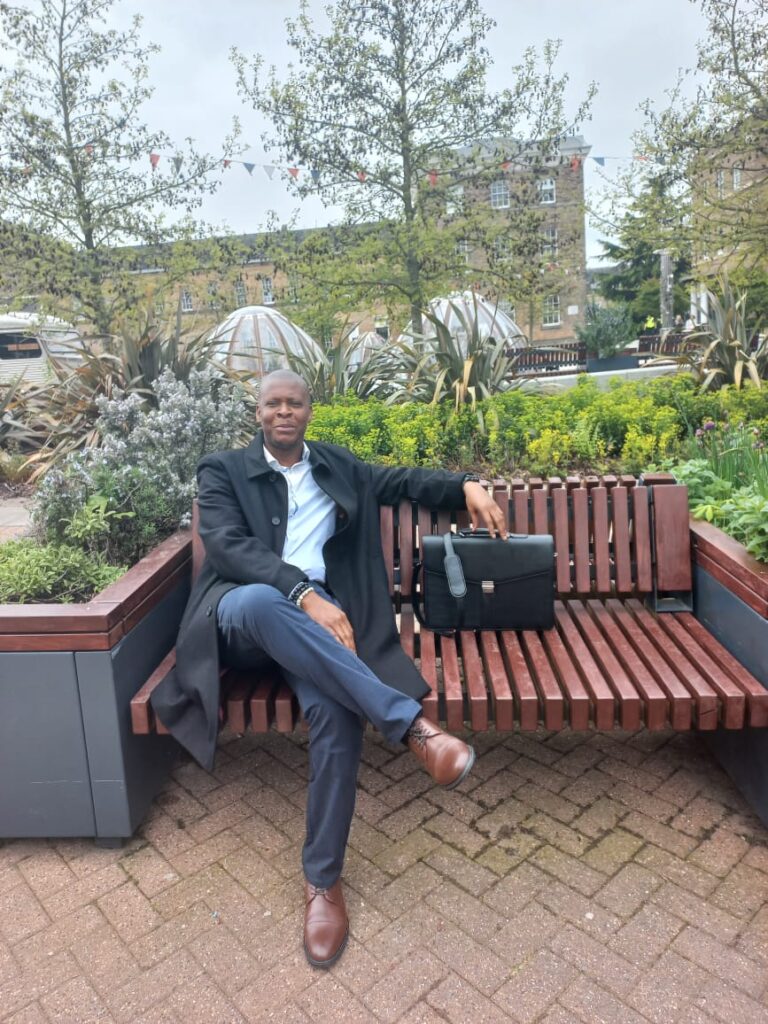
He went from Trade Fair to OAU
Okeke used the break to return to formal education.
He rewrote his O’Level examinations, sat the university entrance examination and gained admission to Obafemi Awolowo University (OAU) to study International Relations.
He graduated in 2015 with a CGPA of 3.94 out of 5.0 and said he finished fifth in a class of 120. His original plan was to enter Nigeria’s foreign service. Those academic figures and the career ambition come from his own published account.
The plan did not work.
Okeke said applications to the Ministry of Foreign Affairs and other employers produced no offer. Age limits also excluded him from some graduate programmes.
By 2018, he had taken a job with an insurance company earning ₦40,000 a month. His salary later rose to ₦75,000, with commissions sometimes taking his monthly income to about ₦150,000.
He remained in Nigeria until 2022.
DON’T MISS THIS: Malik Afegbua is recording African elders before their stories are lost
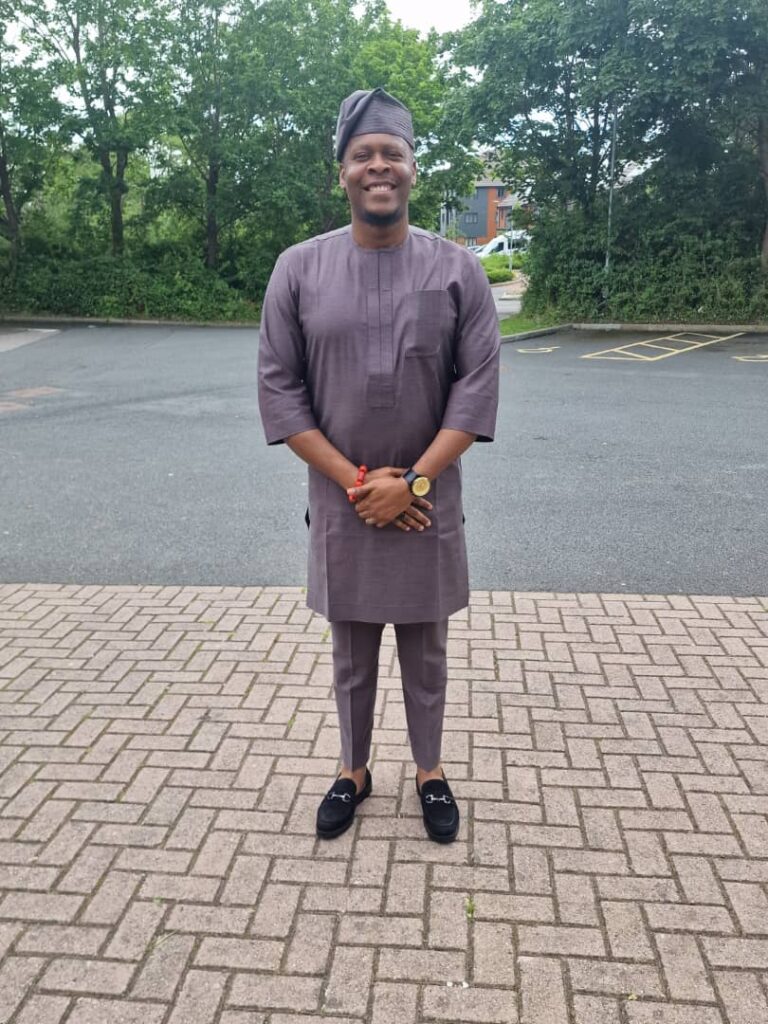
A ₦10 million loan helped finance the move to Britain
Okeke met his future wife in 2021.
The couple decided to leave Nigeria and began saving towards the move. Okeke said an elder brother helped financially and a mentor lent them ₦10 million.
They married in August 2022 and moved to Britain two months later. His first job there was not in finance.
Okeke worked 10-hour shifts in an Amazon warehouse during the winter. He then enrolled for qualifications with the Association of Accounting Technicians (AAT).
Passing Level 2 helped him secure his first finance position at the University of Leicester, according to his account. After completing Level 3, he moved to the London School of Economics.
By September 2025, Okeke said he was working as a finance officer and managing a £16 million grant while completing Level 4 of the AAT qualification.
Follow BLKNOW on social media for amazing stories that make sense of Africa’s history, its people and its future: Instagram.