
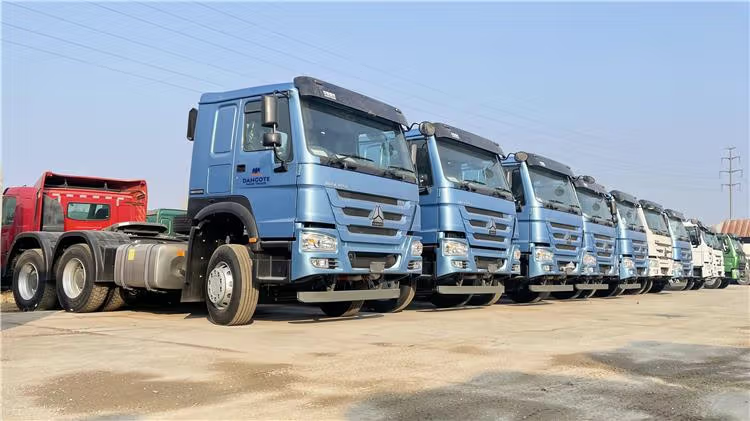
Dangote Petroleum Refinery spent an estimated ₦720 billion on 4,000 compressed natural gas trucks for a simple reason: it wanted more control over what happened to its fuel after it left the refinery.
Until 2025, the company depended largely on depot owners, marketers and independent transporters to move petrol and diesel from its 650,000-barrel-a-day refinery in Lagos to the rest of Nigeria.
The new fleet was designed to change that.
Dangote announced in June 2025 that it would begin delivering fuel directly to filling stations, manufacturers, telecom companies and other large customers at no additional transport charge. Reuters reported that the investment put the refinery into more direct competition with companies that had traditionally handled fuel trading and distribution.
The rollout took longer than planned.
By August 2026, however, the company was delivering fuel without a separate logistics charge to customers in Lagos, Ogun, Rivers, Kaduna, Abuja and Delta, and had expanded the programme into Kano, Imo, Anambra and Nasarawa.
The trucks have become part of a larger attempt to control more of the journey between the refinery and the pump.
The fleet was supposed to launch in August 2025
Dangote originally planned to begin nationwide direct distribution on August 15, 2025.
The company ordered 4,000 CNG-powered tankers from China and said the fleet represented about ₦720 billion in capital spending.
The trucks would collect petrol and diesel from the refinery and deliver directly to customers rather than requiring those customers to arrange their own haulage.
Only about 450 trucks had arrived by the original launch date because shipping capacity from China was insufficient to move thousands of vehicles at once, according to company officials.
Dangote eventually began loading more than 1,000 CNG trucks in September.
The refinery said at the time that another 500 were at the port and the rest were expected to arrive later that month.
By January 2026, refinery chief executive David Bird said about 4,000 trucks were on site. He also said the company had not yet completed the full rollout because it was installing a computerised system to track volumes and improve delivery security.
The vehicles had arrived. Getting all of them onto the road was a separate job.
The direct-sales model has changed more than once
The transition has not followed the clean national rollout Dangote first announced.
In January, independent marketers said they were buying directly from the refinery after Dangote reduced the minimum direct purchase to 250,000 litres. The arrangement allowed some buyers to bypass the depot network.
A month later, reporting showed the refinery again using a more controlled distribution model involving major marketers and depot owners.
The free trucking programme also took longer to reach the market than expected.
S&P Global reported in July that many of Dangote’s CNG trucks had remained parked while the refinery worked through its distribution strategy. Bird acknowledged that too many were still idle.
Dangote executive Devakumar Edwin said the company intended to put the full fleet to work as it moved more product through truck loading rather than coastal distribution.
Free delivery began reaching an initial group of states in July and expanded again in August.
DON’T MISS THIS: Billionaire Strive Masiyiwa is betting $720m on Africa’s AI push
Owning the trucks gives Dangote more control of the market
The refinery’s interest in logistics is commercial as much as operational.
Dangote already owns the plant producing the fuel.
Direct sales give it a closer relationship with the companies buying that fuel.
Owning the trucks adds control over delivery.
That removes some of the businesses that traditionally sit between refinery and filling station from individual transactions.
It has also contributed to friction inside the downstream industry.
Fuel marketers have challenged other parts of Dangote’s strategy, including its opposition to petroleum import licences. In May 2026, the Depot and Petroleum Products Marketers Association of Nigeria argued that one private refinery’s commercial interests should not override the regulator’s responsibility to maintain competition and security of supply.
Dangote has repeatedly rejected accusations that it is trying to create a monopoly.
The company’s position is that direct distribution cuts unnecessary costs and gives customers more reliable access to locally refined fuel.
Both arguments point to the same structural change.
Dangote is no longer merely a company selling petrol at the refinery gate. It is becoming a larger participant in the network that determines how the product reaches the Nigerian market.